Semiconductor Industry
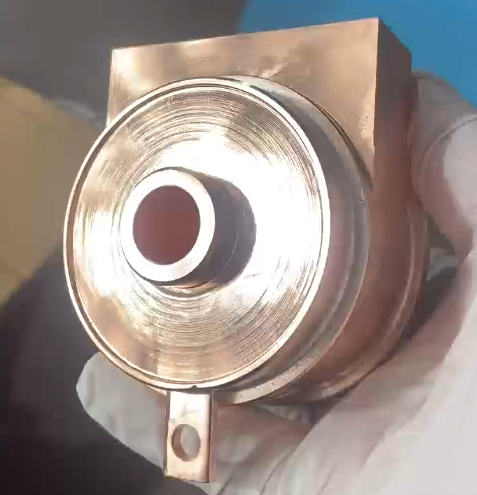
Vacuum brazing is essential in the semiconductor industry, where ultra-clean, high-precision bonding is required for the fabrication of advanced electronic components. It is widely used in the production of heat sinks, sensor housings, wafer processing tools, and vacuum chamber assemblies. The process enables the joining of dissimilar metals and complex structures without introducing flux or contaminants, making it ideal for maintaining the ultra-high vacuum and purity levels demanded in semiconductor environments. Vacuum brazing ensures superior thermal conductivity, structural integrity, and leak-tight sealing—critical for temperature-sensitive and high-performance semiconductor devices.

Articles

Ultra-Thin Titanium Alloy Microchannel Semiconductor Water Cooler
With the continuous increase in power density of semiconductor devices, efficient and reliable thermal management has become a critical factor affecting system performance and service life.

Vacuum Brazing of Ultra-Thin Titanium Alloy Microchannel Semiconductor Water Coolers – Finished Products
Vacuum brazing is a critical manufacturing process for producing ultra-thin titanium alloy microchannel water coolers used in semiconductor thermal management.

Vacuum Heat Treatment of Nickel-Beryllium Alloy Spring Components
Nickle beryllium (Ni-Be) alloy spring components are widely used in electrical connectors, precision contacts, relays, aerospace mechanisms and high reliability electronic systems due to their excellent combination of high strength, elasticity, fatigue resistance, and stable electrical performance.

6061 Aluminum Alloy Water Cooling Plates for Advanced Thermal Management Applications
Thermal management is a critical requirement in electronics, electric vehicles, and power equipment. As systems become more compact and power-dense, efficient heat dissipation solutions are essential to ensure reliability and long service life.

304 Stainless Steel Liquid Cooling Distributors for Server and Data Center Applications
With the rapid growth of cloud computing, artificial intelligence, and high-performance computing, efficient server cooling has become a critical requirement.