Brazed stainless steel capillary heat exchangers represent an advanced design in compact thermal management, using thin stainless steel tubes or channels joined via brazing for efficient heat transfer in tight spaces. These devices leverage capillary action within narrow passages to enhance fluid flow and heat exchange, making them ideal for high-pressure, high-temperature applications. They outperform traditional exchangers in size and efficiency due to their all-stainless construction, which resists corrosion better than copper-brazed alternatives.
Design Features
Stainless steel plates or capillaries, typically AISI 316, form corrugated channels brazed together with nickel or iron-based fillers in a vacuum furnace. This creates a robust, leak-proof structure where fluids flow countercurrently through alternating narrow paths, promoting turbulence for optimal heat transfer. Capillary forces control brazing material flow, ensuring uniform joints even in complex geometries without filling functional channels.
Applications
These exchangers excel in refrigeration as evaporators, condensers, and sub-coolers, handling aggressive media like biogas or oils. They suit HVAC, industrial processes, and renewable energy systems, offering high efficiency in compact footprints. All-stainless variants prevent copper leaching in corrosive environments.
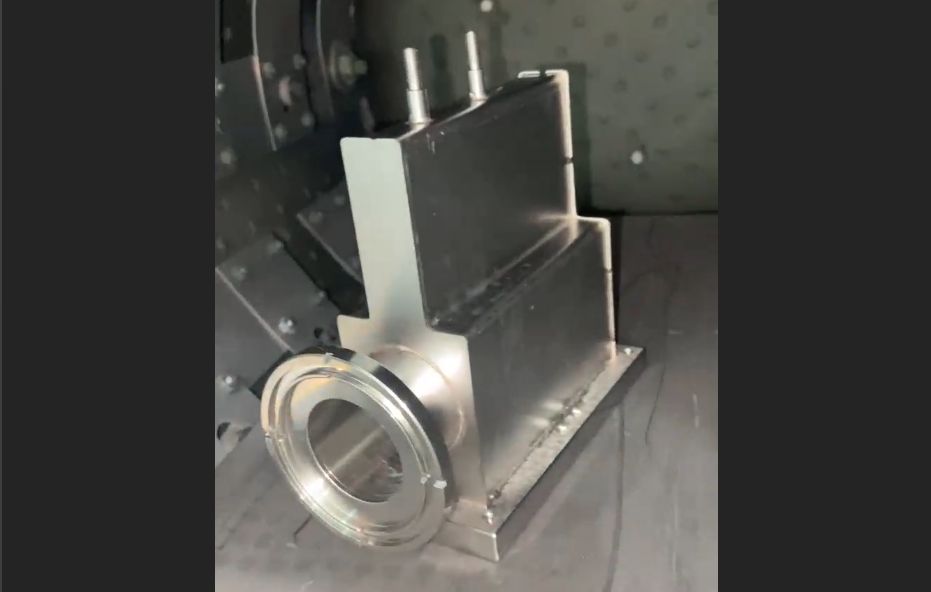
304 stainless steel vacuum chambers and flange assemblies are used in equipment where controlled vacuum environments are required. Manufacturing these assemblies can involve joining multiple stainless steel components while maintaining dimensional accuracy.
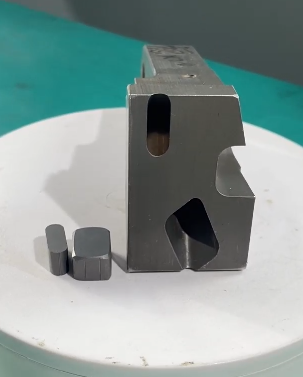
Cemented carbide brings extreme hardness and outstanding wear resistance to any cutting edge. Cr12MoV tool steel delivers high compressive strength good toughness and excellent dimensional stability. Weld them together and you get a component that outperforms either material alone.
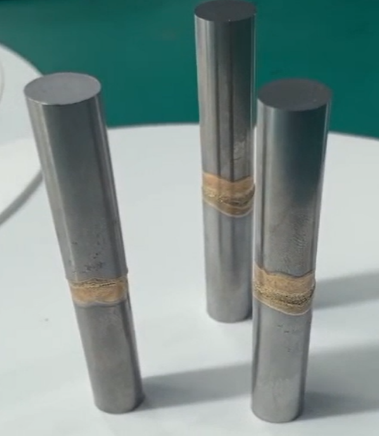
Tungsten carbide vacuum brazed products are high-performance industrial components designed for applications requiring exceptional hardness, wear resistance, and durability.