
 Product News
Vacuum Brazed Finished Products of Tungsten Steel and 40Cr
Normantherm•9/14/2026
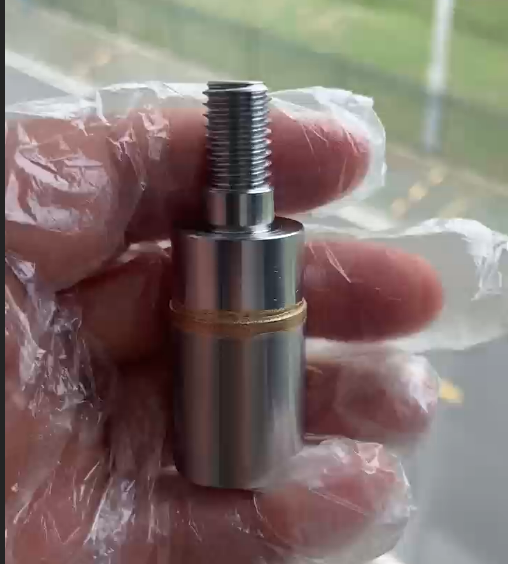
Joining tungsten steel and 40Cr steel is a common type of dissimilar-material joining challenge in industrial component manufacturing. Tungsten steel, commonly referring to cemented carbide or tungsten carbide-based materials, provides high hardness and wear resistance, while 40Cr steel offers a combination of strength, toughness, and machinability.
For components that require the properties of both materials, vacuum brazing of tungsten steel and 40Cr can provide a controlled method of producing a finished brazed assembly.
The finished products demonstrate how vacuum furnace technology can be applied to precision components where reliable joining, controlled heating, and reduced oxidation are important.
Why Join Tungsten Steel with 40Cr?
Tungsten carbide is widely used in applications requiring high hardness, wear resistance, and resistance to mechanical abrasion. However, carbide components are often combined with a steel substrate or supporting structure rather than being used as a complete component on their own.
40Cr steel can provide the structural support required for these assemblies while offering good machinability and mechanical properties.
Combining the two materials allows manufacturers to utilize the properties of each material in different regions of the same component. The carbide can provide a wear-resistant working surface, while the 40Cr steel can form the supporting body.
The challenge is creating a reliable joint between materials with significantly different physical and thermal characteristics.
Vacuum Brazing of Tungsten Carbide and 40Cr
Vacuum brazing is a furnace-based joining process in which a suitable filler metal is used to join the components without melting the primary materials.
For tungsten carbide and 40Cr assemblies, the components are first cleaned and accurately positioned. The joint is designed with an appropriate clearance for filler-metal flow, and the filler alloy is selected according to the carbide grade, steel composition, joint geometry, and service conditions.
The assembly is then placed inside a vacuum brazing furnace. The furnace evacuates the chamber and heats the components according to a controlled thermal cycle.
When the filler metal reaches its appropriate melting range, it flows through the prepared joint and forms the connection between the tungsten carbide and 40Cr steel. Controlled cooling then allows the brazed assembly to return to a stable condition.
The exact brazing temperature, holding time, filler alloy, and cooling procedure should be determined through the specific material combination and application requirements.
Why Use a Vacuum Furnace?
Atmospheric heating can cause oxidation on metal surfaces, which may interfere with brazing and increase the need for post-processing. A vacuum furnace provides a controlled environment during the thermal cycle and helps minimize oxidation and contamination.
For tungsten carbide and 40Cr vacuum brazing, furnace temperature control is also important because the two materials have different thermal properties. Controlled heating can help provide more consistent thermal exposure across the joint and the complete assembly.
A properly configured furnace can support repeatable brazing cycles for both prototype development and production applications.
Process Considerations for Tungsten Steel and 40Cr
The quality of a brazed tungsten carbide and 40Cr component depends on more than furnace temperature alone. Material preparation, joint design, filler selection, component positioning, and cooling conditions all influence the final result.
Important considerations include:
- Surface preparation: Clean joining surfaces are important for effective filler-metal wetting and flow.
- Joint clearance: The joint gap must be appropriate for the selected filler and component geometry.
- Thermal control: Heating should provide sufficiently uniform temperature across the assembly.
- Material compatibility: Tungsten carbide and 40Cr respond differently to thermal cycling, so process development is important.
- Inspection: Finished components can be evaluated through visual, dimensional, and application-specific inspection methods.
Applications of Vacuum Brazed Tungsten Carbide and 40Cr
The combination of tungsten carbide and steel is useful when a component requires a combination of high wear resistance and a strong steel support structure.
Potential applications include cutting tools, wear-resistant tooling, forming tools, dies, machining components, industrial blades, and other precision wear components.
The appropriate joining process depends on the geometry and operating conditions of the finished product.
Importance of Temperature Uniformity
Temperature uniformity is particularly important when brazing dissimilar materials. The filler metal must reach its required melting range throughout the joint while avoiding unnecessary overheating of the surrounding components.
For production brazing, the furnace should provide stable temperature control and a suitable temperature field across the working zone. Furnace capacity, loading arrangement, component size, and batch quantity should all be considered when selecting equipment.
This is one reason industrial vacuum brazing furnaces are designed with controlled heating zones and thermal monitoring systems.
Normantherm Vacuum Brazing Solutions
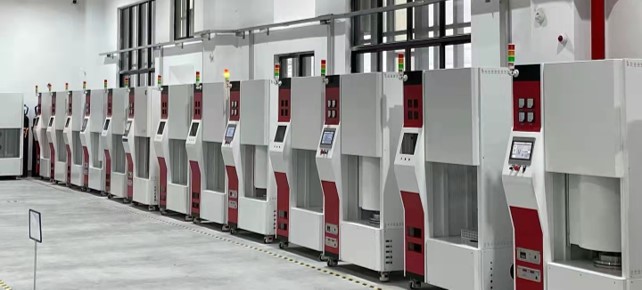
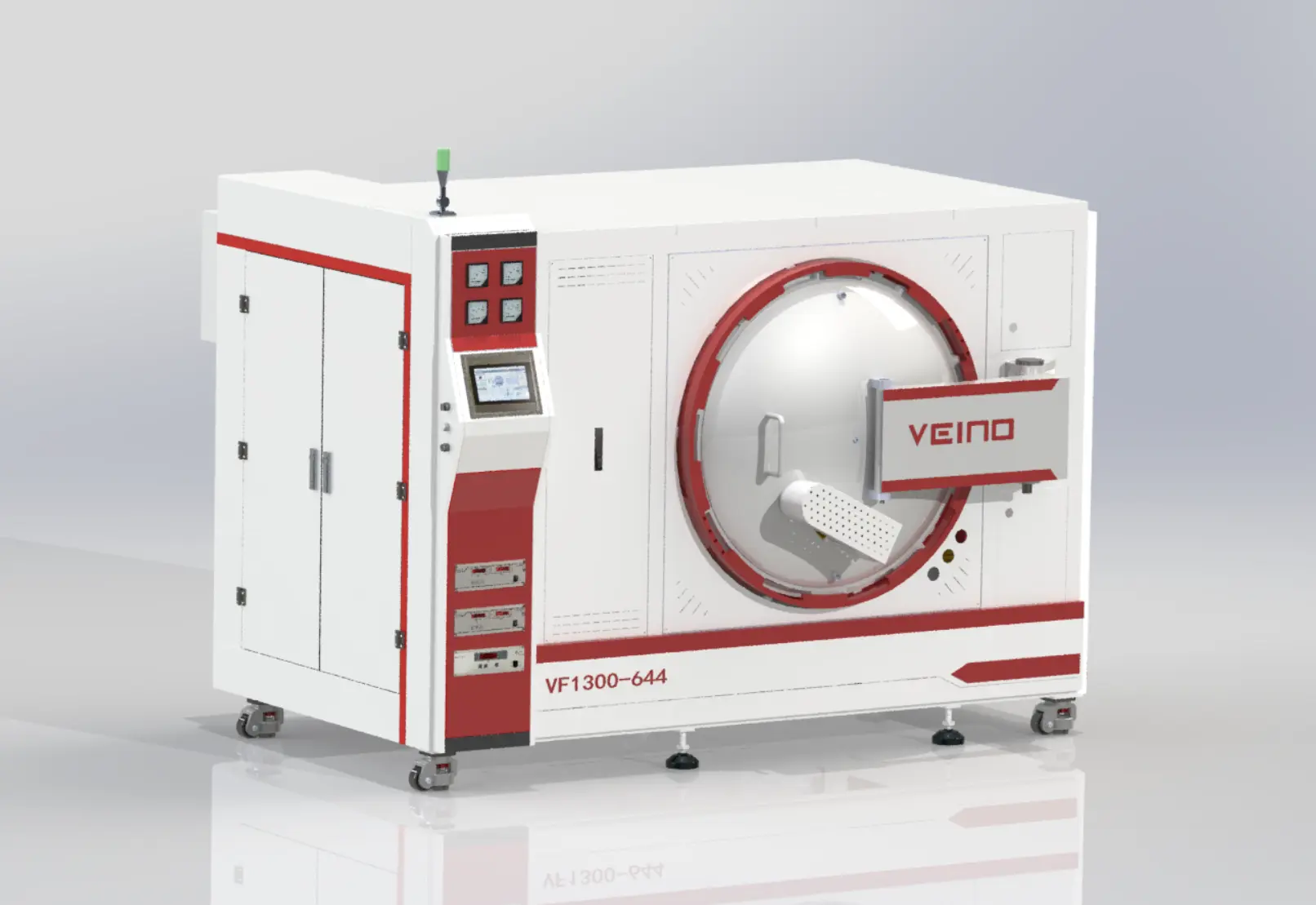
Normantherm provides industrial vacuum brazing furnaces and vacuum heat treatment equipment for precision metal joining and thermal processing. Its furnace solutions are applicable to materials and combinations used in tooling, cutting tools, heat-transfer components, semiconductor parts, automotive components, and other industrial applications.
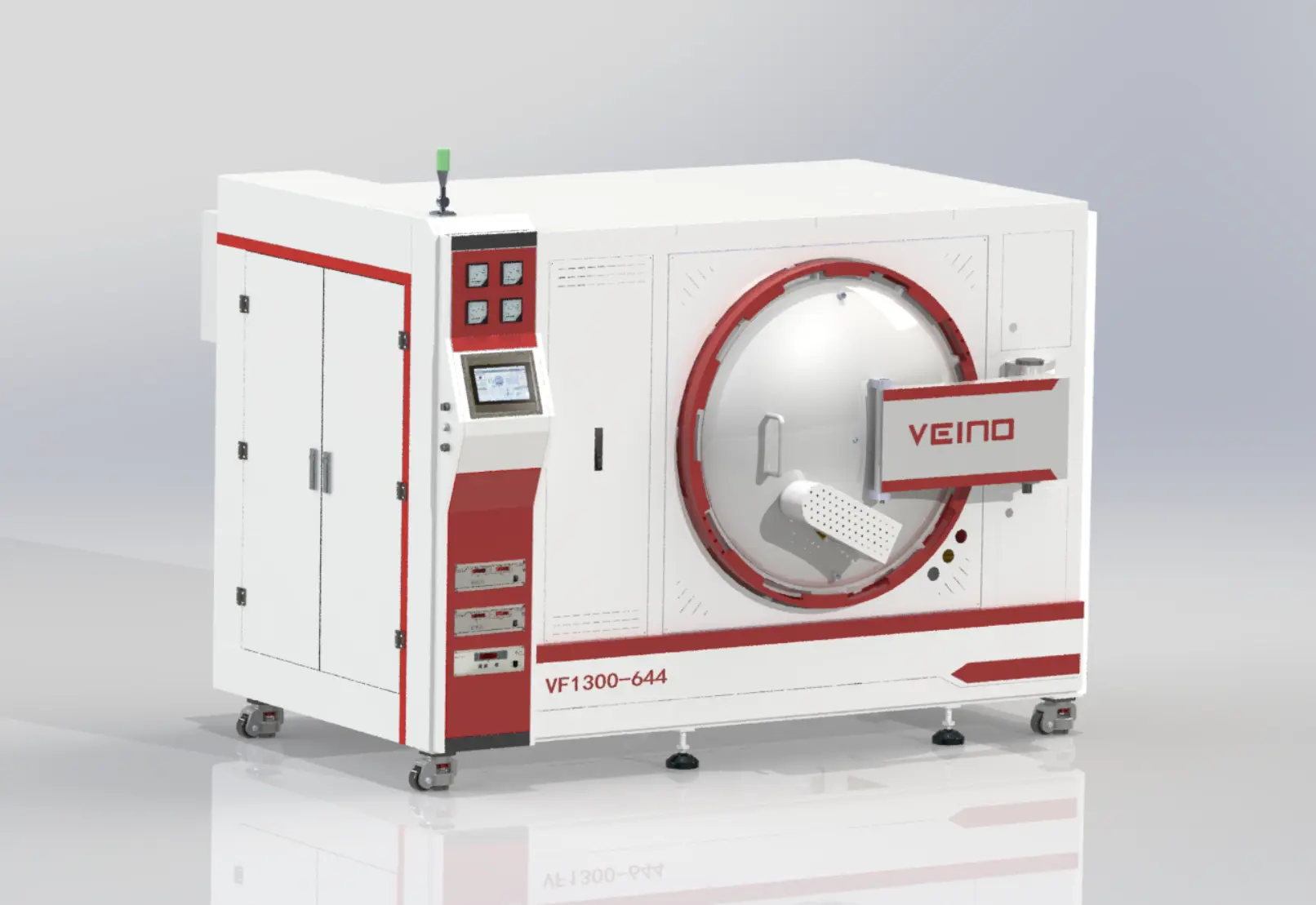
The VF Series is designed for industrial vacuum thermal processing, while compact furnace solutions can be used for smaller components and specialized applications.
Explore Normantherm Vacuum Furnace Solutions
For tungsten carbide and 40Cr assemblies, furnace selection should be based on component dimensions, material combination, brazing cycle, production volume, required vacuum conditions, and cooling requirements.
Conclusion
Vacuum brazed tungsten steel and 40Cr finished products demonstrate the value of controlled furnace brazing for joining dissimilar materials. Tungsten carbide can provide the required hardness and wear resistance, while 40Cr steel can provide the supporting structure and mechanical strength.
By controlling the vacuum atmosphere, heating cycle, joint conditions, and cooling process, manufacturers can develop a repeatable brazing process for tungsten carbide and 40Cr components. For manufacturers producing carbide tools, wear-resistant components, dies, and precision tooling, vacuum brazing technology offers an effective approach to dissimilar-material joining.
You may also like
Product News Product News
 Product News