
 Product News
The Science Behind Vacuum Brazing for PCD, PCBN, and Diamond Cutting Tools
Normantherm•7/5/2026
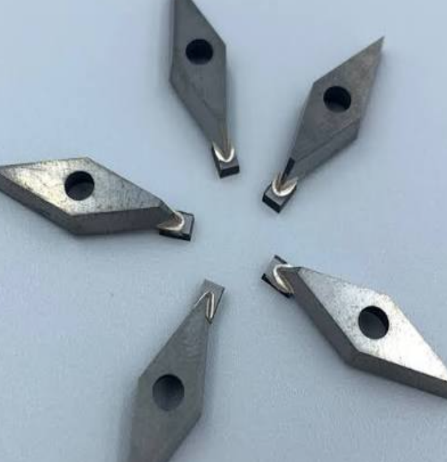
Manufacturing ultra-hard cutting tools—such as Polycrystalline Diamond (PCD), Polycrystalline Cubic Boron Nitride (PCBN), and single-crystal diamond—requires an exceptionally precise joining method because these advanced materials are highly sensitive to thermal degradation and chemical oxidation. Vacuum brazing provides the ideal solution by joining the diamond or PCBN tip to a steel or carbide tool body in an oxygen-free environment, typically at high vacuum levels reaching $10^{-5}\text{ mbar}$. Because raw diamond is a non-reactive carbon structure, standard brazing alloys cannot wet or bond to its surface. To overcome this, the process utilizes specialized active brazing filler metals containing chemically reactive elements like titanium or chromium. When heated in the vacuum furnace, these active elements migrate to the interface and chemically react with the diamond’s carbon (or the PCBN's nitrogen/boron), forming a microscopic, atomically bonded carbide or nitride reaction layer. This strong chemical reaction creates an incredibly robust joint capable of withstanding the extreme mechanical and thermal stresses encountered during heavy-duty machining.
The critical engineering challenge in this process is managing the narrow thermal window required to protect the ultra-hard tips. Polycrystalline diamond begins to graphitize (turn back into soft carbon) and degrade at temperatures above 700°C to 750°C in the presence of oxygen, though a high vacuum extends this thermal limit up to roughly 850°C. Therefore, the vacuum furnace must utilize precisely controlled heating cycles and highly specialized active braze alloys that melt and flow seamlessly within this tight temperature window. Furthermore, because diamond, carbide, and steel expand and contract at wildly different rates, a controlled, uniform cooling phase inside the vacuum chamber is mandatory to minimize residual stresses. By preventing oxidation, eliminating the need for corrosive chemical fluxes, and ensuring absolute temperature uniformity ($\pm 5^\circ\text{C}$), vacuum brazing guarantees that the cutting tools maintain their pristine, micro-engineered cutting edges, delivering maximum tool life and wear resistance in high-speed industrial applications.
You may also like
Product News Product News
 Product News