
 Product News
Invar Alloy and YG-15 Cemented Carbide Vacuum Brazing
Normantherm•10/19/2026
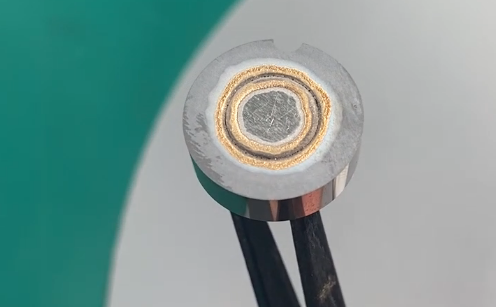
Joining Invar alloy with cemented carbide YG-15 presents a specialized manufacturing challenge because the two materials have significantly different physical and mechanical properties. Invar is valued for its exceptionally low thermal expansion, while YG-15 cemented carbide is selected for its high hardness, wear resistance, and ability to withstand substantial compressive loads.
For precision tooling and industrial components that combine dimensional stability with wear resistance, vacuum brazing of Invar alloy and YG-15 cemented carbide offers a potential joining solution. The process requires careful control of brazing temperature, filler-metal compatibility, joint clearance, and cooling conditions to produce a suitable joint while managing thermal stress.
Invar Alloy: Low Thermal Expansion and Dimensional Stability
Invar is an iron-nickel alloy known for its exceptionally low coefficient of thermal expansion over a specific temperature range. Its dimensional stability makes it useful in precision instruments, measuring equipment, tooling fixtures, optical systems, and specialized industrial components.
In assemblies where dimensional changes must be minimized, Invar can provide a stable structural or reference component. However, its mechanical properties and thermal behavior depend on the exact alloy grade, processing history, and operating temperature.
YG-15 Cemented Carbide: Hardness and Wear Resistance
YG-15 is a grade designation commonly associated with tungsten carbide-cobalt cemented carbide containing approximately 15% cobalt by mass, although the precise composition and properties should be confirmed against the material supplier's specification.
Cemented carbide combines hard tungsten carbide particles with a metallic binder. It is widely used in wear-resistant components, industrial tooling, dies, and applications requiring high hardness and compressive strength.
Combining YG-15 with Invar can provide a component that uses the carbide for wear resistance and the Invar alloy for dimensional stability. The joining process must accommodate the different properties of both materials.
Applications of Invar and Cemented Carbide Components
The combination of low thermal expansion and high wear resistance may be useful in specialized applications where both properties are required.
Potential application areas include:
- Precision tooling and fixtures: For selected assemblies requiring dimensional stability and localized wear resistance.
- Measuring and positioning equipment: Where a stable structural component is combined with a hard contact or wear surface.
- Industrial dies and wear components: For specialized designs that benefit from a combination of a low-expansion alloy and cemented carbide.
- Precision engineering systems: For custom components designed around specific dimensional, mechanical, and environmental requirements.
Suitability depends on the actual component design, loading conditions, operating temperature, and qualification results.
Normantherm Vacuum Furnace Solutions
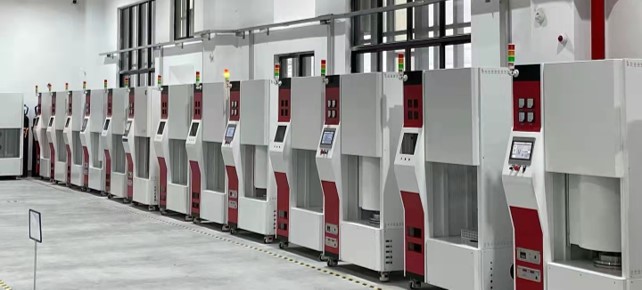
Normantherm provides vacuum furnace systems for precision brazing, metal joining, annealing, and other industrial thermal-processing applications. For joining Invar alloy with YG-15 cemented carbide, furnace selection and process development should be based on the actual material grades, assembly geometry, filler-metal requirements, joint clearance, and production volume.
A properly developed vacuum brazing process can help manufacturers produce specialized dissimilar-material assemblies for precision tooling and industrial engineering applications.
Conclusion
Vacuum brazing of Invar alloy and cemented carbide YG-15 combines the dimensional stability of a low-expansion alloy with the hardness and wear resistance of tungsten carbide-based material.
The main engineering challenges involve thermal-expansion mismatch, filler-metal compatibility, surface preparation, and control of the heating and cooling cycle. A suitable vacuum brazing furnace provides a controlled environment for developing and repeating the joining process, but the finished joint must still be validated for its intended application. Normantherm offers vacuum furnace solutions for precision brazing and advanced industrial material joining.
Normantherm Vacuum Furnace
📞 +86 19801260783
✉️ contact@norman-therm.com
🌐 www.norman-therm.com
You may also like
Product News Product News
 Product News