
 Industry News
Choosing Between Molybdenum and Graphite Heating Elements for High-Vacuum Industrial Furnaces
Normantherm•7/2/2026
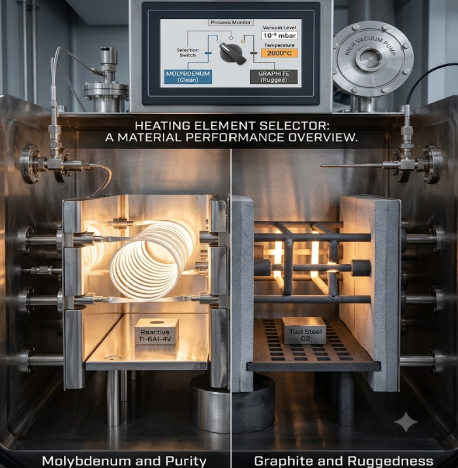
When selecting the hot zone for a high-vacuum industrial furnace, the choice between molybdenum and graphite heating elements significantly impacts process purity, temperature capability, and operating costs. Molybdenum elements excel in ultra-clean environments—such as aerospace, medical device manufacturing, and semiconductor processing—because they do not outgas carbon, preventing the carburization of sensitive metals like titanium and stainless steel. Capable of operating at extreme vacuum levels, molybdenum provides an exceptionally clean thermal environment but comes with higher upfront material costs and becomes highly brittle after its first heating cycle, making it susceptible to mechanical damage during manual loading. Conversely, graphite heating elements offer superior mechanical ruggedness, excellent thermal shock resistance, and a significantly lower initial investment, making them the industry standard for general heat treatment, tools and dies, and high-temperature vacuum brazing. Graphite remains structurally stable at temperatures exceeding 2000°C and does not suffer from embrittlement, though it can release trace carbon volatiles that may discolor or alter the surface chemistry of certain reactive alloys. Ultimately, operators must weigh the strict metallurgical purity requirements of their components against the cost efficiency and structural durability of the hot zone material to choose the optimal element for their specific production workflows.
You may also like
Industry News Industry News
 Industry News