
 Industry News
Application of Vacuum Brazing Technology in Aerospace Field
Normantherm•10/7/2026
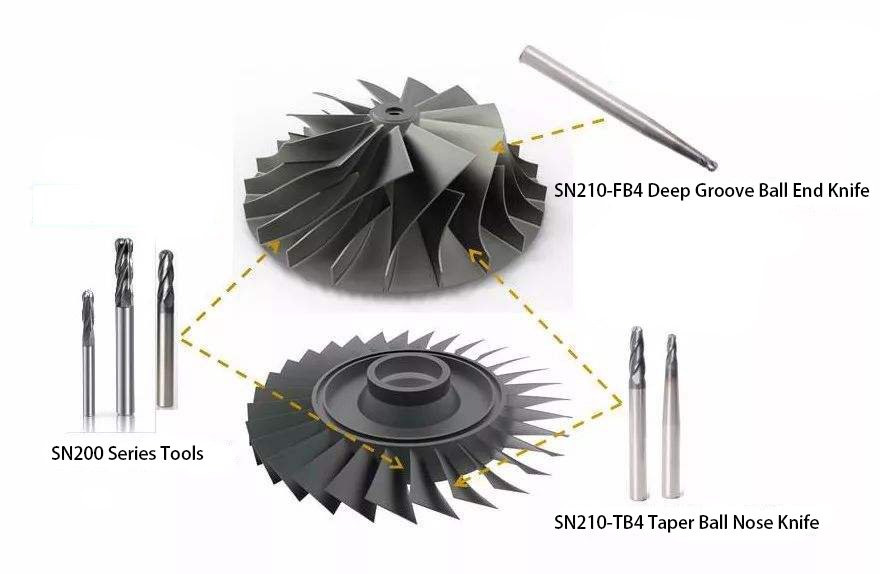
Aerospace manufacturing requires joining technologies capable of processing advanced materials and complex components while maintaining strict control over the thermal cycle and processing environment. As aircraft and spacecraft designs increasingly incorporate lightweight alloys, high-temperature materials, and complex assemblies, vacuum brazing technology in the aerospace field has become an important precision joining process.
Vacuum brazing uses a controlled vacuum atmosphere and carefully programmed heating cycle to join suitable metal components using a brazing filler material. Unlike fusion welding, the base materials are not intended to melt during brazing. The filler metal melts and flows into the prepared joint before solidifying during cooling.
For aerospace applications, this approach can be useful for complex assemblies containing multiple joints, thin sections, intricate geometries, and combinations of similar or dissimilar metals.
Normantherm develops vacuum furnace systems for aerospace vacuum brazing and related thermal-processing applications. Its aerospace applications include materials such as aluminum, titanium, stainless steel, niobium, and tantalum, with applications covering heat exchangers, honeycomb structures, turbine components, compressor components, and fuel lines.
Why Vacuum Brazing Is Used in Aerospace Manufacturing
Aerospace components must balance low weight with mechanical performance, thermal resistance, corrosion resistance, dimensional stability, and service reliability. Joining these components can therefore be more demanding than conventional industrial fabrication.
Vacuum brazing offers a controlled thermal environment that can be adapted to the material combination and component design. The absence of normal atmospheric conditions during high-temperature processing can help reduce oxidation and contamination at the joint surfaces.
Another important characteristic is the ability to heat a complete assembly inside the furnace. Instead of applying concentrated heat to individual joints, the entire component can be subjected to a programmed thermal cycle.
This is particularly useful for assemblies containing many joints or geometries that would be difficult to process with localized joining methods.
How Vacuum Brazing Works for Aerospace Components
A typical aerospace vacuum brazing process begins with component preparation and cleaning. The mating surfaces are prepared according to the joint design, and an appropriate brazing filler material is positioned at the joint.
The assembly is then loaded into the vacuum furnace. After evacuation, the furnace follows a controlled heating program.
As the assembly reaches the required brazing temperature, the filler metal melts and flows into the joint through capillary action. The furnace then follows the specified cooling cycle until the filler solidifies and the component reaches a suitable handling temperature.
The exact process parameters depend on the material combination, filler metal, joint clearance, component geometry, furnace configuration, and required performance.
Vacuum Brazing Furnace Selection for Aerospace
Choosing a vacuum brazing furnace for aerospace applications requires consideration of the complete production process rather than only the furnace's maximum temperature.
Key factors include:
- Effective heating-zone dimensions
- Component weight and batch size
- Required brazing temperature
- Vacuum level and pumping capacity
- Temperature accuracy and uniformity
- Heating-zone configuration
- Cooling system
- Furnace cleanliness
- Process monitoring and data recording
- Fixture requirements
A compact furnace may be appropriate for small aerospace components or R&D work, while large industrial assemblies require a substantially larger working zone and higher load capacity.
Normantherm Vacuum Brazing Furnace for Aerospace
Normantherm provides industrial vacuum furnace systems for vacuum brazing, annealing, degassing, sintering, and other thermal-processing applications.
Its VF series includes different chamber configurations for processing components ranging from small precision assemblies to larger industrial aerospace parts. The VF1300-1288, for example, provides a 1200 × 800 × 800 mm effective heating area and is designed for applications involving stainless steel, titanium alloys, high-temperature alloys, and dissimilar metals.
Normantherm's aerospace vacuum brazing technology can support manufacturers working with:
- Aerospace heat exchangers
- Honeycomb structures
- Turbine-related components
- Compressor components
- Fuel-system components
- Titanium and stainless steel assemblies
- Other precision aerospace metal assemblies
The actual furnace configuration and brazing process should be selected according to component dimensions, material combination, filler-metal requirements, production volume, and applicable aerospace specifications.
Future of Vacuum Brazing in Aerospace Manufacturing
The aerospace industry continues to develop lighter structures, more efficient thermal-management systems, advanced propulsion technologies, and increasingly complex material combinations.
These developments create continuing demand for controlled joining processes capable of handling advanced materials and complex geometries.
Vacuum brazing is well suited to applications where atmospheric contamination must be minimized and where multiple joints need to be processed within a controlled thermal cycle.
As aerospace manufacturing becomes more automated and data-driven, furnace monitoring, programmable recipes, temperature mapping, process documentation, and quality inspection will become increasingly important parts of the overall brazing workflow.
Conclusion
The application of vacuum brazing technology in the aerospace field extends across a wide range of precision manufacturing requirements, from heat exchangers and honeycomb structures to turbine-related components, compressor assemblies, and fuel-system components.
By combining high-vacuum processing with controlled heating and cooling, vacuum brazing furnaces provide a suitable platform for joining selected aerospace materials and complex assemblies.
Successful aerospace brazing ultimately depends on the complete process: material selection, surface preparation, joint design, filler-metal selection, furnace configuration, temperature control, vacuum performance, cooling, and inspection.
Normantherm provides vacuum furnace solutions for aerospace vacuum brazing and advanced thermal processing, with furnace configurations designed around the specific requirements of industrial components.
Normantherm Vacuum Furnace
📞 +86 19801260783
✉️ contact@norman-therm.com
🌐 www.norman-therm.com
You may also like
Industry News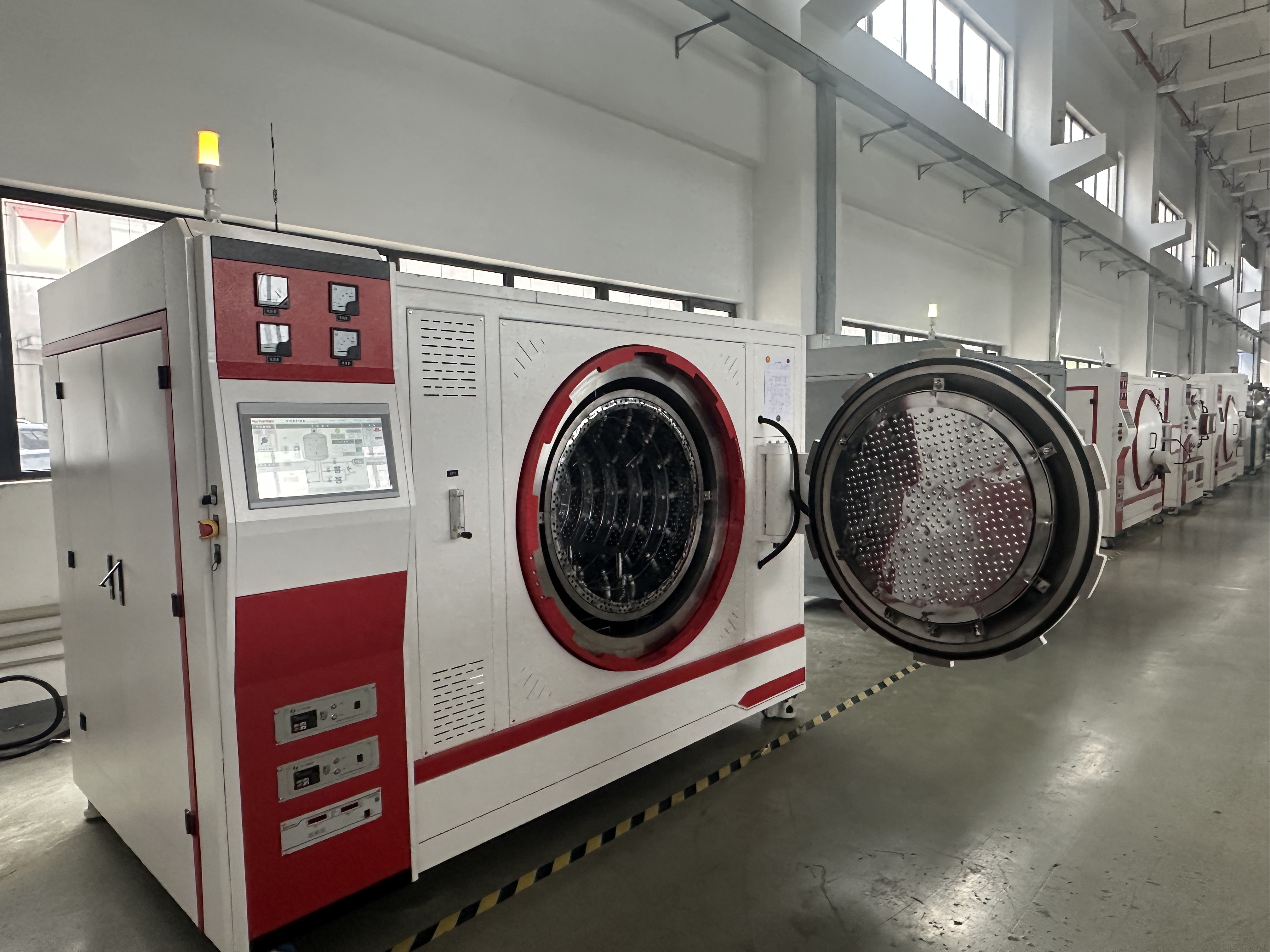 Industry News
 Industry News