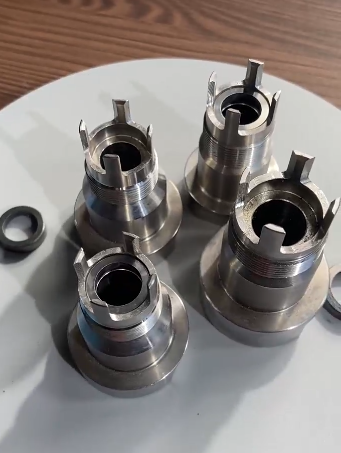
Welding tungsten steel and stainless steel is a challenging process due to the large differences in hardness melting temperature and thermal expansion between the two materials. Tungsten steel offers exceptional wear resistance and strength while stainless steel provides toughness corrosion resistance and structural support.
To achieve a reliable joint advanced joining methods such as vacuum brazing diffusion welding or controlled TIG brazing are commonly used instead of conventional fusion welding. These processes limit thermal stress reduce cracking risk and protect the hardness of the tungsten steel. Proper filler material selection and precise temperature control are essential to form a strong metallurgical bond.
When correctly welded tungsten steel and stainless steel assemblies deliver excellent durability wear resistance and corrosion performance making them suitable for cutting tools industrial machinery valves and high-load mechanical components.
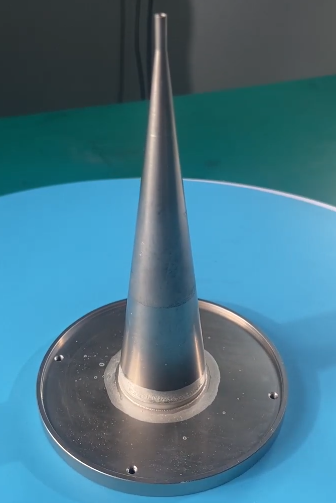
An ion source sampling cone sits at the front line of mass spectrometry. It faces high temperatures corrosive gases and constant mechanical stress. The weld quality determines whether the cone delivers accurate results or becomes a source of contamination and drift.
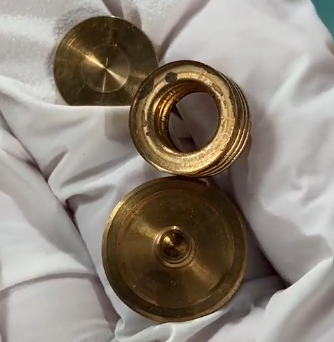
Beryllium copper is a high-performance copper alloy widely used in industries requiring a unique combination of electrical conductivity, strength, elasticity, and wear resistance.
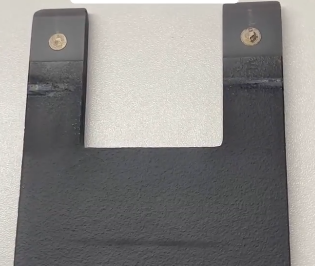
Silver contacts on silicon nitride ceramic heating plates take a beating. High temperatures thermal cycling and mechanical stress eventually take their toll. When the contact degrades heating performance suffers.