Vacuum Welding of Tungsten Steel and H13 Mold Steel for High-Performance Tooling
Normantherm•4/10/2026
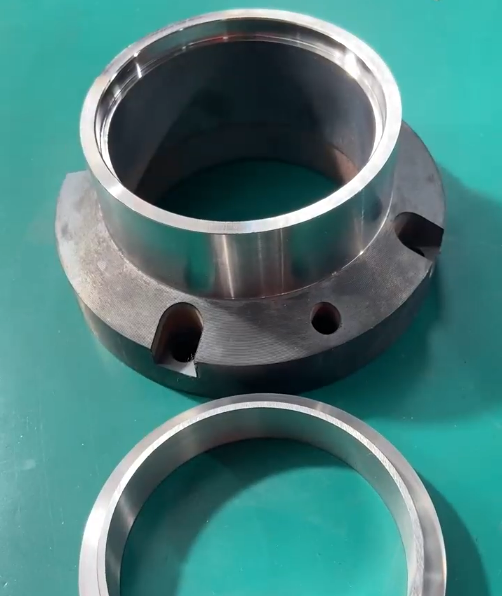
In modern tooling and mold manufacturing, combining materials with complementary properties is essential for achieving superior performance. Tungsten steel and H13 mold steel are two widely used materials that, when joined together, provide an optimal balance of hardness, toughness, and thermal resistance.
Vacuum welding has emerged as an effective method for joining these dissimilar materials, ensuring strong and reliable bonds without compromising their individual properties.
Understanding the Materials: Tungsten Steel and H13 Mold Steel
Tungsten Steel is widely used for its exceptional hardness, wear resistance, and ability to maintain cutting performance under extreme conditions.
H13 Mold Steel is a chromium-based hot work steel known for its excellent toughness, thermal fatigue resistance, and stability at high temperatures.
By combining these materials, manufacturers can create components that perform reliably in demanding industrial environments.
Challenges in Joining Tungsten Steel and H13 Steel
Joining tungsten steel with H13 mold steel presents several technical challenges due to differences in thermal expansion, hardness, and material structure.
Conventional welding methods often lead to:
Thermal stress and cracking
Weak bonding at the interface
Oxidation and contamination
Distortion of the workpiece
To overcome these challenges, a controlled and contamination-free process is required.
Advantages of Vacuum Welding Technology
Vacuum welding provides a highly controlled environment that ensures clean and reliable joining of dissimilar materials.
Key advantages include:
-Oxidation-Free Environment
The vacuum eliminates oxygen, preventing oxidation during the welding process.
-Strong Metallurgical Bonding
Precise temperature control allows for uniform bonding between tungsten steel and H13 steel.
-Reduced Thermal Stress
Controlled heating and cooling cycles minimize stress and prevent cracking.
-High Process Consistency
Vacuum furnace systems enable repeatable and stable production results.
Performance Benefits of Vacuum-Welded Components
Components produced through vacuum welding of tungsten steel and H13 steel offer several advantages:
High wear resistance at critical surfaces
Excellent toughness and impact resistance
Superior performance under high temperatures
Extended service life in demanding applications
Stable dimensional accuracy
These characteristics are essential for high-performance tooling and mold systems.
Applications in Industrial Manufacturing
Vacuum-welded tungsten steel and H13 components are widely used in industries such as:
Die casting and mold manufacturing
Hot forging tools
High-temperature forming dies
Wear-resistant industrial components
Heavy machinery and tooling systems
As industrial processes become more demanding, the need for durable and high-performance material combinations continues to grow.
Normantherm Vacuum Furnace Solutions
At Normantherm, advanced vacuum furnace systems are designed to support precision welding and brazing of complex material combinations.
Our systems provide:
High-vacuum processing environments
Accurate temperature control and uniform heating
Reliable joining of dissimilar materials
Consistent production quality
These capabilities enable manufacturers to produce high-quality tooling components with confidence.
Conclusion
Vacuum welding of tungsten steel and H13 mold steel is a critical process for manufacturing high-performance tooling components. By combining hardness, toughness, and thermal resistance, this material pairing delivers exceptional durability in demanding industrial applications.
With advanced vacuum furnace technology and precise process control, Normantherm continues to provide reliable solutions for complex material joining in modern manufacturing.
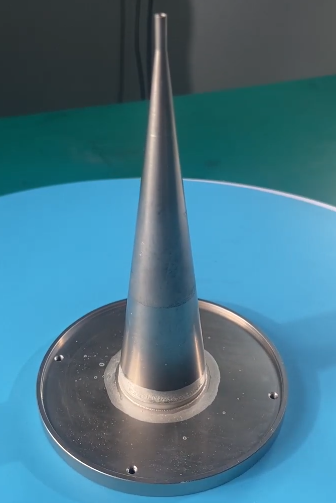
An ion source sampling cone sits at the front line of mass spectrometry. It faces high temperatures corrosive gases and constant mechanical stress. The weld quality determines whether the cone delivers accurate results or becomes a source of contamination and drift.
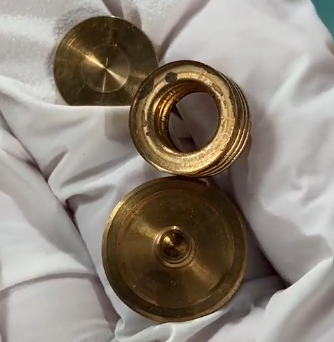
Beryllium copper is a high-performance copper alloy widely used in industries requiring a unique combination of electrical conductivity, strength, elasticity, and wear resistance.
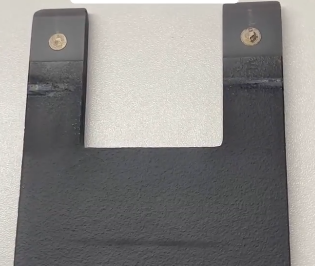
Silver contacts on silicon nitride ceramic heating plates take a beating. High temperatures thermal cycling and mechanical stress eventually take their toll. When the contact degrades heating performance suffers.