Vacuum Furnace Brazing for Copper–Graphite Thermal Interface Bonding
Normantherm•12/30/2025
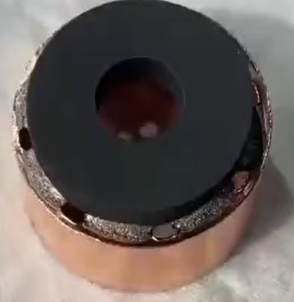
Vacuum furnace brazing is a proven and reliable method for copper–graphite bonding, widely used in the manufacture of high-performance thermal interface components for demanding industrial and scientific applications. By combining graphite’s low thermal expansion and high temperature stability with copper’s exceptional thermal conductivity, this process delivers advanced thermal management solutions with superior heat dissipation efficiency.
In vacuum furnace brazing, graphite and copper components are joined in an oxygen-free environment that prevents oxidation and contamination of the bonding surfaces. Specially engineered active brazing alloys are used to promote wetting and metallurgical adhesion between the non-metallic graphite and metallic copper. Controlled heating ensures uniform alloy flow at the interface, producing a strong, void-free bond without the use of flux.
The resulting copper-graphite thermal interface assemblies offer excellent thermal conductivity, high mechanical reliability and resistance to thermal cycling and thermal shock. These properties make vacuum-brazed graphite-to-copper joints ideal for applications such as semiconductor cooling plates, high-power heat sinks, EDM electrodes and aerospace thermal structures.
Compared to conventional joining methods, vacuum furnace brazing of copper and graphite provides cleaner joints, precise dimensional control and long-term performance stability. This makes it the preferred technology for manufacturing durable, high-efficiency thermal interface components used in extreme operating environments.
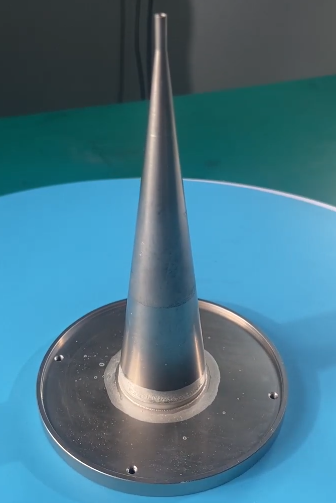
An ion source sampling cone sits at the front line of mass spectrometry. It faces high temperatures corrosive gases and constant mechanical stress. The weld quality determines whether the cone delivers accurate results or becomes a source of contamination and drift.
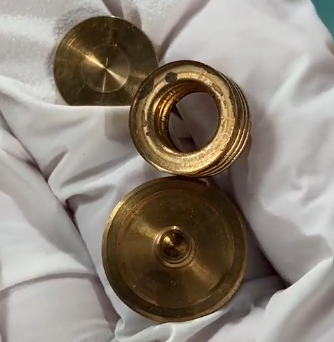
Beryllium copper is a high-performance copper alloy widely used in industries requiring a unique combination of electrical conductivity, strength, elasticity, and wear resistance.
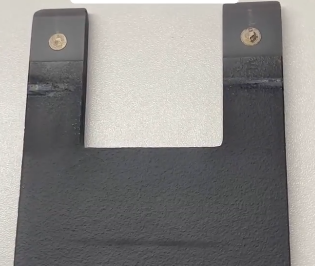
Silver contacts on silicon nitride ceramic heating plates take a beating. High temperatures thermal cycling and mechanical stress eventually take their toll. When the contact degrades heating performance suffers.