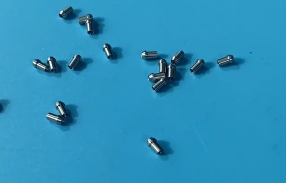
316 stainless steel is widely trusted for its corrosion resistance and durability but it can develop unwanted magnetism during machining forming or welding. For precision components that need to remain non-magnetic this residual magnetism creates real problems. Vacuum demagnetization offers a clean effective solution.
Unlike simple degaussing that only addresses surface magnetism our vacuum demagnetization process treats the entire part. The component is placed in a controlled vacuum environment and subjected to a carefully managed thermal and magnetic cycle that restores the material to its true non-magnetic state. This is a permanent solution not a temporary fix.
The benefits extend beyond just removing magnetism. A magnetically clean 316 stainless steel component performs better in sensitive applications. Machining accuracy improves because magnetic interference is eliminated. Reliability increases especially in electronic medical and precision measurement environments where stray magnetism can disrupt performance.
This clean controlled process is ideal for industries requiring high-quality non-magnetic results. Whether for medical devices semiconductor equipment aerospace components or precision instruments vacuum demagnetization ensures 316 stainless steel delivers exactly what engineers expect.
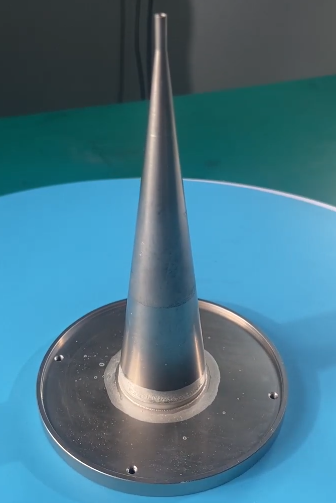
An ion source sampling cone sits at the front line of mass spectrometry. It faces high temperatures corrosive gases and constant mechanical stress. The weld quality determines whether the cone delivers accurate results or becomes a source of contamination and drift.
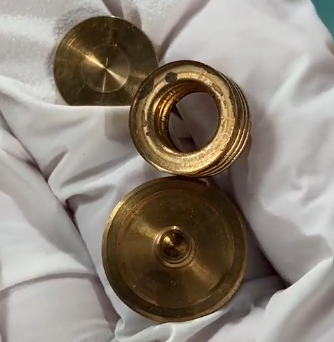
Beryllium copper is a high-performance copper alloy widely used in industries requiring a unique combination of electrical conductivity, strength, elasticity, and wear resistance.
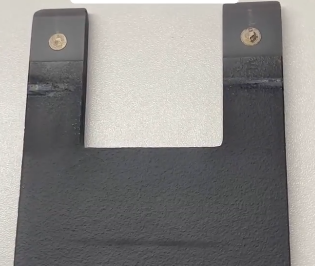
Silver contacts on silicon nitride ceramic heating plates take a beating. High temperatures thermal cycling and mechanical stress eventually take their toll. When the contact degrades heating performance suffers.