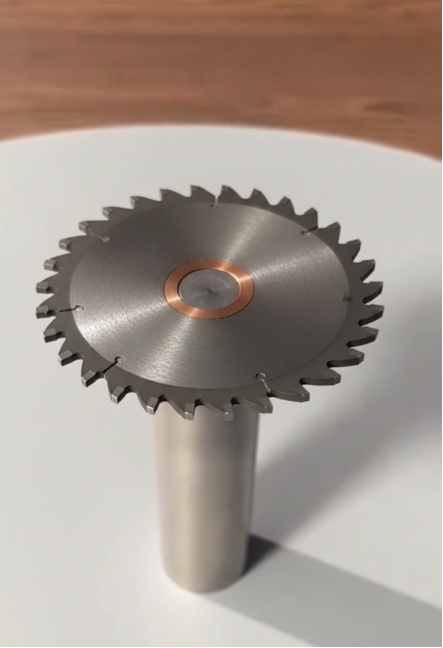
In high performance cutting, the weak point is often the joint, not the steel.Wear-resistant steel saw blades demand a joint that can withstand high cutting loads, thermal cycling, and severe abrasion without premature failure. To achieve this, the blade segments are vacuum brazed.
Why Vacuum Brazing?
Wearresistant steels and tool steels are sensitive to heat. If the joining process introduces oxidation, overheating or distortion, the cutting edge will lose hardness and dimensional accuracy. Unlike traditional methods, vacuum brazing occurs in a completely oxygen-free environment which gives clean, oxide-free joints. The entire assembly is heated in a high vacuum. No flux is required, so there are no corrosive residues and no surface contamination around the teeth or cutting edge. Vacuum brazing also ensures controlled joint gap, minimal distortion which is critical for thin saw blades where even small distortions will cause run out and poor cutting performance and provides high joint strength at temperature.
Advantages of the Normantherm Vacuum Brazing Furnace
ü Normantherm vacuum brazing furnaces provide a clean, oxygenfree environment that prevents oxidation and decarburization of wearresistant steels during joining.
ü They deliver highly uniform temperature control, ensuring complete, consistent wetting of the brazing alloy across the entire joint.
ü Precise control of heating and cooling rates minimizes distortion, which is critical for thin tools such as saw blades.
ü Deep vacuum levels and stable process parameters produce dense, porefree joints with high mechanical strength and fatigue resistance.
Conclusion
Compared to conventional brazing methods, vacuum brazing delivers superior joint consistency, longer blade service life, and stable cutting performance under demanding industrial conditions. This process makes the saw blade suitable for heavy-duty cutting of hard and abrasive materials, where reliability and wear resistance are essential.
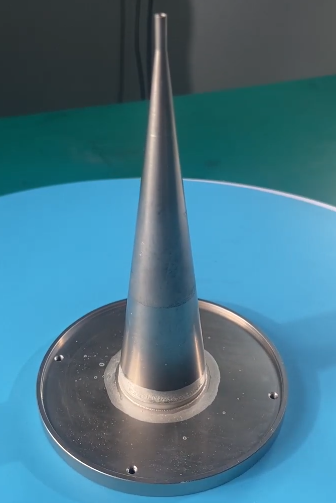
An ion source sampling cone sits at the front line of mass spectrometry. It faces high temperatures corrosive gases and constant mechanical stress. The weld quality determines whether the cone delivers accurate results or becomes a source of contamination and drift.
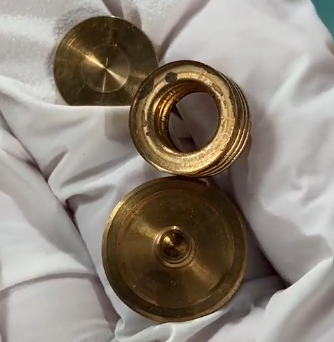
Beryllium copper is a high-performance copper alloy widely used in industries requiring a unique combination of electrical conductivity, strength, elasticity, and wear resistance.
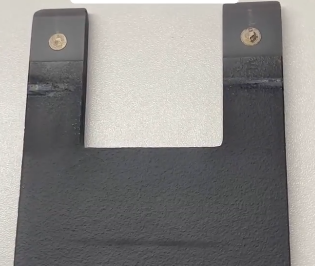
Silver contacts on silicon nitride ceramic heating plates take a beating. High temperatures thermal cycling and mechanical stress eventually take their toll. When the contact degrades heating performance suffers.