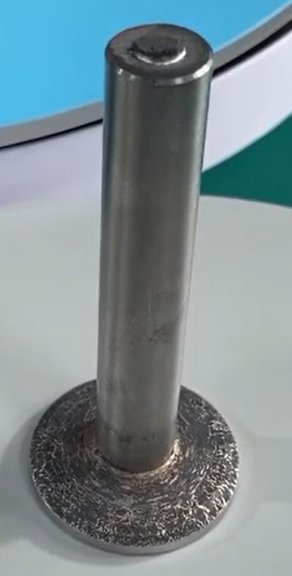
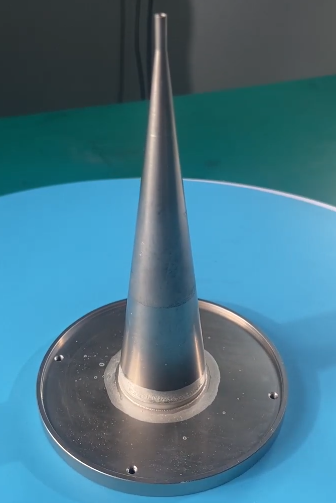
Tungsten steel, stainless steel and mold steel vacuum brazed product
Normantherm•5/22/2026
Vacuum brazing of tungsten steel, stainless steel, and mold steel is a precision joining process widely used in tooling, industrial machinery, semiconductor equipment, and wear-resistant applications. This advanced brazing method enables the strong and reliable bonding of dissimilar metals while maintaining excellent dimensional accuracy and mechanical performance.
In the vacuum brazing process, the components are assembled with a suitable filler alloy and heated inside a high-vacuum furnace. The vacuum environment prevents oxidation and contamination, allowing the filler metal to flow uniformly between the tungsten steel, stainless steel, and mold steel surfaces to create a clean and high-strength metallurgical bond.
The product shown above is a precision vacuum brazed assembly designed for high-strength and wear-resistant industrial applications. Tungsten steel provides excellent hardness and wear resistance, stainless steel offers corrosion resistance, and mold steel contributes toughness and structural stability. The combination of these materials produces a durable component capable of operating under high temperature, pressure, and repeated mechanical stress.
Vacuum brazing ensures minimal distortion, excellent joint integrity, and long service life, making it ideal for manufacturing cutting tools, molds, dies, precision fixtures, and specialized industrial components requiring superior performance and reliability.
An ion source sampling cone sits at the front line of mass spectrometry. It faces high temperatures corrosive gases and constant mechanical stress. The weld quality determines whether the cone delivers accurate results or becomes a source of contamination and drift.
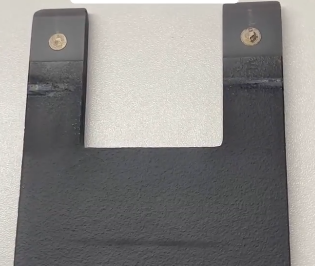
Beryllium copper is a high-performance copper alloy widely used in industries requiring a unique combination of electrical conductivity, strength, elasticity, and wear resistance.
Silver contacts on silicon nitride ceramic heating plates take a beating. High temperatures thermal cycling and mechanical stress eventually take their toll. When the contact degrades heating performance suffers.