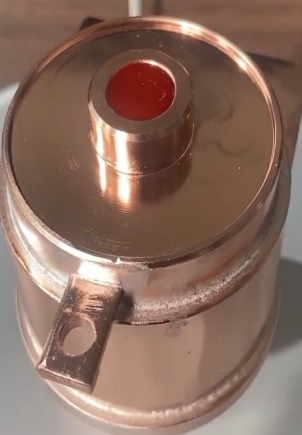
Oxygen-free copper vacuum brazing is a precision joining process used in applications where high conductivity, cleanliness, and joint reliability are essential. Oxygen-free copper is valued for its extremely low oxygen content, which provides superior electrical and thermal conductivity and makes it ideal for vacuum and high-purity environments.
In this process, copper components are assembled with a suitable brazing filler metal and placed inside a high-vacuum brazing furnace. The vacuum atmosphere prevents oxidation during heating, allowing the filler metal to melt and flow smoothly into the joint by capillary action. This results in clean, dense, and leak-tight joints without the use of flux or post-brazing cleaning.
Vacuum brazing preserves the inherent properties of oxygen-free copper while ensuring strong metallurgical bonding and minimal distortion. The finished assemblies demonstrate excellent thermal efficiency, high electrical performance, and long-term stability, even under demanding thermal and mechanical conditions.
Due to these advantages, oxygen-free copper vacuum brazing is widely used in power electronics, vacuum systems, heat exchangers, and high-frequency electrical equipment, where performance and reliability are critical.
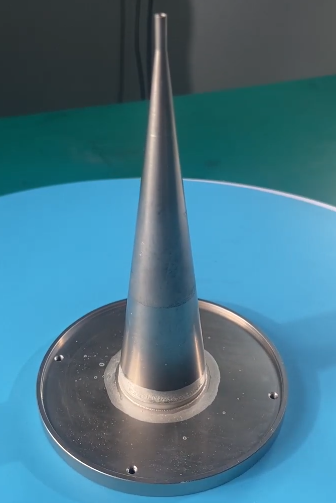
An ion source sampling cone sits at the front line of mass spectrometry. It faces high temperatures corrosive gases and constant mechanical stress. The weld quality determines whether the cone delivers accurate results or becomes a source of contamination and drift.
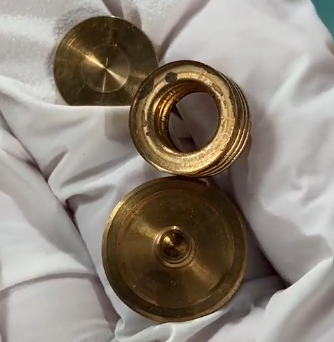
Beryllium copper is a high-performance copper alloy widely used in industries requiring a unique combination of electrical conductivity, strength, elasticity, and wear resistance.
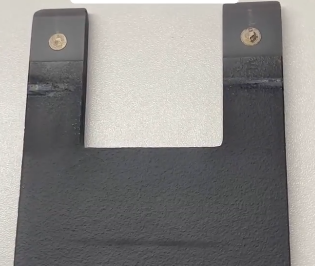
Silver contacts on silicon nitride ceramic heating plates take a beating. High temperatures thermal cycling and mechanical stress eventually take their toll. When the contact degrades heating performance suffers.