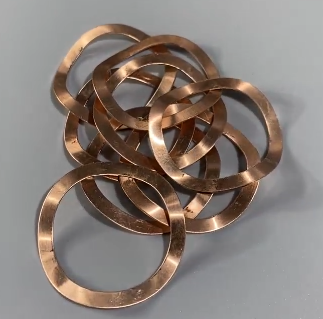
Phosphor bronze is a trusted material for springs in electrical and precision applications. It offers good conductivity corrosion resistance and natural springiness. But to reach its full potential phosphor bronze springs require precision heat treatment.
Without proper heat treatment a phosphor bronze spring may feel inconsistent. It might lose tension over time or fail earlier than expected. The internal stresses from forming can also lead to dimensional instability during use.
Our heat treatment process solves these problems. Through careful control of temperature and soak time we enhance the elasticity of the spring material. The process also improves fatigue resistance so the spring can endure millions of cycles without losing its force or breaking.
Mechanical stability is another key benefit. Heat treated springs hold their shape and tension under load. They perform consistently across temperature variations and long service lives. For applications where spring performance cannot drift this stability matters greatly.
This process is ideal for electrical contacts industrial mechanisms and precision spring applications of all kinds. When you need a phosphor bronze spring that delivers consistent performance and long service life precision heat treatment makes the difference.
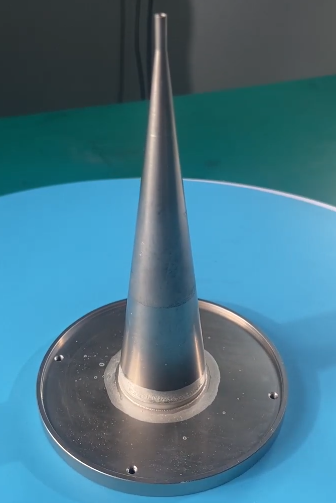
An ion source sampling cone sits at the front line of mass spectrometry. It faces high temperatures corrosive gases and constant mechanical stress. The weld quality determines whether the cone delivers accurate results or becomes a source of contamination and drift.
Beryllium copper is a high-performance copper alloy widely used in industries requiring a unique combination of electrical conductivity, strength, elasticity, and wear resistance.
Silver contacts on silicon nitride ceramic heating plates take a beating. High temperatures thermal cycling and mechanical stress eventually take their toll. When the contact degrades heating performance suffers.