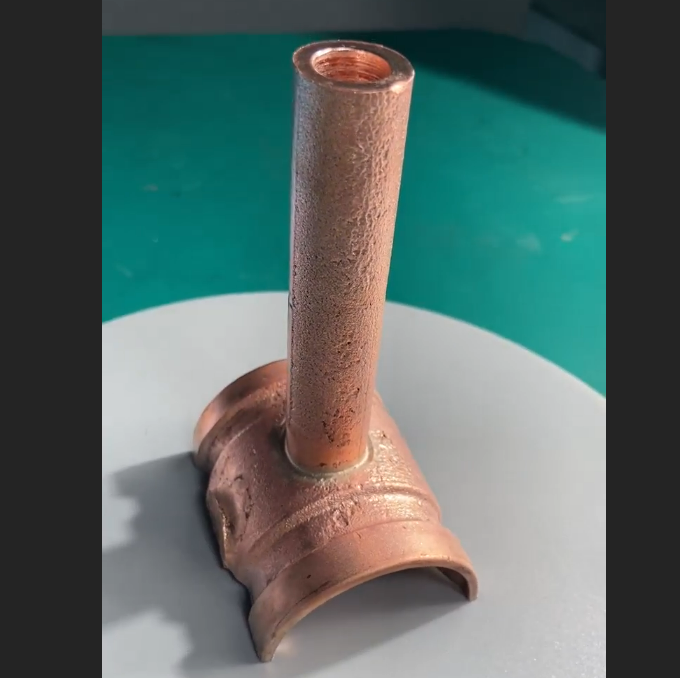
Copper Welded Finished Products for High-Performance Industrial Applications
Normantherm•5/17/2026
Copper is one of the most widely used engineering materials in industries requiring excellent electrical conductivity, thermal efficiency, and reliable mechanical performance. From power systems to cooling equipment, welded copper components play a critical role in modern industrial applications.
To achieve high-strength joints and maintain copper’s performance characteristics, manufacturers increasingly rely on advanced vacuum welding and brazing technologies.
Why Copper Is Widely Used in Industrial Manufacturing
Copper is valued for its unique combination of electrical and thermal properties.
Key advantages include:
Exceptional electrical conductivity
High thermal conductivity for heat transfer
Good corrosion resistance
Excellent machinability and formability
Reliable long-term performance
These properties make copper suitable for demanding industrial environments.
Challenges in Welding Copper Components
Copper welding requires precise process control because the material conducts heat rapidly and can oxidize easily at elevated temperatures.
Manufacturers commonly face challenges such as:
Oxidation during heating
Difficulty maintaining joint consistency
Heat dissipation affecting weld quality
Risk of weak bonding in complex assemblies
To overcome these issues, controlled furnace environments are essential.
Advantages of Vacuum Welding and Brazing for Copper
Vacuum welding and brazing provide a highly controlled process environment that improves the quality of copper joints.
Key benefits include:
Oxidation-Free Processing
The vacuum environment eliminates oxygen, preserving copper surface quality and conductivity.
Strong Metallurgical Bonding
Uniform heat distribution ensures clean and durable joints.
Improved Product Reliability
Consistent joining improves performance in high-temperature and high-current applications.
High Repeatability for Production
Vacuum furnaces ensure stable quality across production batches.
These advantages make vacuum joining ideal for copper-based components.
Performance Benefits of Copper Welded Products
Finished copper welded products provide several operational advantages:
High electrical efficiency
Excellent heat transfer capability
Strong and reliable structural integrity
Long service life under continuous operation
Stable performance in demanding environments
These characteristics are critical for industrial reliability.
Applications in India’s Industrial Sectors
In India, welded copper products are widely used in:
Power electronics and switchgear systems
Heat exchangers and cooling systems
Semiconductor equipment
Electrical connectors and assemblies
Renewable energy systems
As industries continue to modernize, demand for high-performance copper components is growing rapidly.
Normantherm Vacuum Furnace Solutions
At Normantherm, advanced vacuum furnace systems are designed for precision copper welding and brazing applications.
Our systems provide:
High-vacuum, contamination-free environments
Accurate temperature control and uniform heating
Reliable joining for complex copper structures
Consistent and repeatable production quality
These capabilities help manufacturers produce high-quality copper components with confidence.
Conclusion
Copper welded finished products play a vital role in industries requiring superior conductivity, heat transfer, and long-term reliability. Through advanced vacuum welding and brazing technology, manufacturers can achieve clean, durable, and high-performance copper joints.
With advanced furnace technology and proven expertise, Normantherm continues to support industrial manufacturers with reliable solutions for copper joining and precision thermal processing.
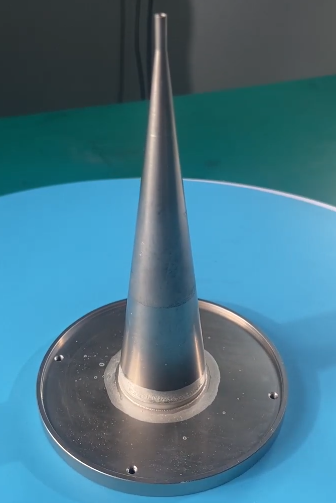
An ion source sampling cone sits at the front line of mass spectrometry. It faces high temperatures corrosive gases and constant mechanical stress. The weld quality determines whether the cone delivers accurate results or becomes a source of contamination and drift.
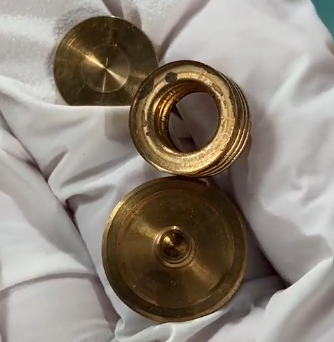
Beryllium copper is a high-performance copper alloy widely used in industries requiring a unique combination of electrical conductivity, strength, elasticity, and wear resistance.
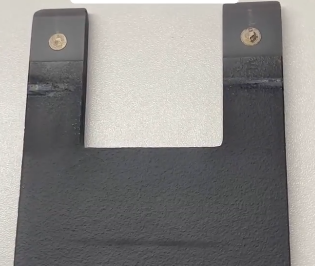
Silver contacts on silicon nitride ceramic heating plates take a beating. High temperatures thermal cycling and mechanical stress eventually take their toll. When the contact degrades heating performance suffers.