Advanced Vacuum Brazing of Graphite to Purple Copper(T2)
Normantherm•12/25/2025
Graphite and purple copper(T2) are frequently combined in high performance engineering components like electrodes, heat exchangers and nuclear fusion components. While purple copper offers good mechanical strength and superior thermal and electrical conductivity, graphite offers exceptional thermal stability, self-lubrication, and electrical conductivity.
However, it is difficult to join these two dissimilar materials with traditional joining methods. Particularly for precision and high temperature applications, vacuum brazing with active fillers has become a dependable way to create high strength, contamination free joints between graphite and copper.
Material Properties
Graphite
Graphite is a carbon-based material with good thermal and electrical conductivity, a low coefficient of thermal expansion, and outstanding thermal stability. Additionally, it has strong chemical inertness and self-lubricating behavior, which make it appropriate for harsh and high-temperature environments. However, graphite's poor wettability with molten metals due to its non-metallic and porous nature makes conventional joining challenging without the use of active brazing techniques.
Purple copper (Pure copper)
Purple copper, also known as high-purity copper, is used extensively due to its exceptional electrical and thermal conductivity, as well as its good ductility and resistance to corrosion. Under vacuum, where oxidation is reduced, it brazes effectively. However, because of its much greater thermal expansion than graphite, residual stresses may be introduced during the process but this typical problem can be significantly reduced through controlled vacuum brazing and appropriate filler metal selection.
Technical Challenges in Graphite-Copper Brazing
There are various technical difficulties when joining graphite and Cu:
§ Graphite's poor wettability with molten copper
§ Weak interfacial bonding without proper filler materials
§ Risk of copper infiltration into graphite pores
§ Mismatch in thermal expansion, resulting in residual stress
CTE: Graphite
CTE: Pure Copper
Proper material selection, surface treatment, and optimized brazing parameters are necessary to overcome these obstacles.
The Metallurgy of Active Brazing
To bond a metal to a non-metal, the filler material must undergo a chemical reaction with the substrate. This is known as Active Brazing. To improve wettability and bonding strength, active brazing alloys are commonly used. The most successful filler materials for this application are Silver-Copper-Titanium (Ag-Cu-Ti) alloys. Titanium is the "active" element. During the vacuum heating process, Titanium atoms migrate to the graphite interface.
The Reaction Layer
Titanium reacts with the carbon atoms in the graphite to form a microscopic layer of Titanium Carbide (), At temperature between .
This layer transforms the graphite surface from a non-wetting ceramic-like state to a metallic state, allowing the Ag-Cu eutectic liquid to spread and bond.
Optimized Process Parameters
To ensure a successful joint, the following vacuum brazing parameters are recommended:
Parameter
Recommended Setting
Vacuum Level
Filler Material
Ag72Cu28Ti (2 - 4% Ti)
Brazing Temp
850°C to 1050°C
Holding Time
10–20 minutes
Cooling Rate
< 5°C / minute (to room temp)
Why the Vacuum Brazing is Preferred
The use of a vacuum Brazing furnace (typically operating at ) is preferred for three primary reasons: Chemical Protection, Physical Cleanliness, and Thermal Precision.
ü Protection of the Active Element (Titanium)
The most critical reason for using a vacuum is the behavior of Titanium. Titanium is a powerful "oxygen getter," meaning it will react with even trace amounts of oxygen or nitrogen to form stable oxides or nitrides. That’s why absence of air is necessary.
ü Flux-Free Joining
Graphite is naturally porous so the use of chemical fluxes can seep into the graphite structure, causing internal corrosion or "outgassing" issues later in the component's life. The vacuum environment itself acts as the cleaning agent by decomposing surface oxides on the purple copper, resulting in a joint with zero chemical residue.
ü Uniform Heating and Stress Control
Due to the CTE mismatch, thermal stress is the enemy of a graphite-Cu bond.
A vacuum furnace heats through radiation, ensuring the entire assembly reaches the target temperature simultaneously. This prevents local "hot spots" that would occur with a torch, which would cause uneven expansion and immediate cracking of the graphite.
Vacuum furnaces allow for highly precise, programmed cooling ramps. This allows the purple copper to slowly relax and the filler metal to solidify evenly, significantly reducing the residual stress trapped in the joint.
ü Degassing of the Graphite
Moisture and trapped gases are naturally present in the pores of graphite. These gases would expand and produce "blowholes" or voids in the braze joint if heated in a typical atmosphere. Before the filler metal melts, the vacuum environment extracts these gases from the graphite (degassing), guaranteeing a dense, void-free metallurgical bond.
Performance Indicators of Vacuum Brazing Furnace
VF Series (Horizontal Type)
Models
Effective Hot Zone Size(L*W*H), mm
Heating Power, Kw
Ultimate Vacuum, Pa
Pressure Rising Rate
MAX Temp.,
Temp.
Uniformity,
VF1300-222
200×200×200
28
≤1 Pa/h
±5
VF1300-422
400×200×200
32
≤1 Pa/h
±5
VF1300-644
600×400×400
60
≤1 Pa/h
±5
VF1300-755
700×500×500
120
≤1 Pa/h
±5
VF1300-966
900×600×600
150
≤1 Pa/h
±5
CUT Series (Vertical/Tubular Type)
Models
Tube Dia., mm
Tube Length, mm
Heat zone, mm
Power, Kw
Ultimate Vacuum, Pa
Max. Temp,
CUT200
200/190
600
400
18
1000
CUT250
250/240
600
400
24
1000
TF series (Horizontal/Tubular Type)
Models
Tube Dia., mm
Tube Length, mm
Heat zone, mm
Power, Kw
Ultimate Vacuum, Pa
Max. Temp,
TF1000-200-HV-SL-T10
200
1400
400
10.8
1000
TF1000-250-HV-SL-T10
250
1400
400
10.8
1000
TF1000-100-HV-T7
100
900
400
4.8
1000
TF1000-200-HV-T10
200
1100
600
18
1000
TF1000-250HV-T10
250
900
400
10.8
1000
Conclusion
An efficient and commercially successful technique for joining graphite and purple copper is vacuum brazing. High-strength and high-performance joints can be produced by employing active brazing alloys, exact vacuum control, and optimized process parameters. Graphite-copper vacuum brazing will become more crucial in contemporary manufacturing as sophisticated thermal and electronic applications continue to expand.
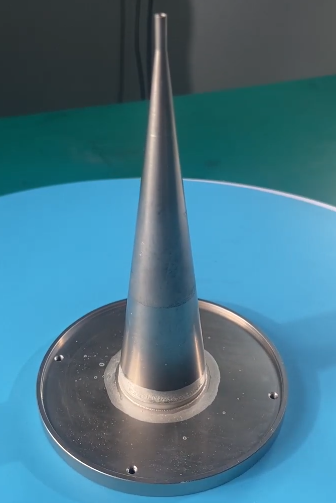
An ion source sampling cone sits at the front line of mass spectrometry. It faces high temperatures corrosive gases and constant mechanical stress. The weld quality determines whether the cone delivers accurate results or becomes a source of contamination and drift.
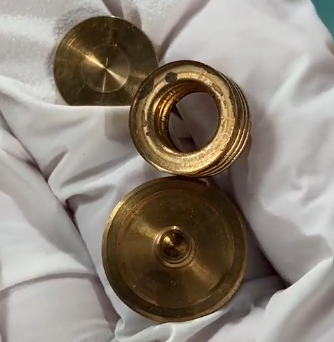
Beryllium copper is a high-performance copper alloy widely used in industries requiring a unique combination of electrical conductivity, strength, elasticity, and wear resistance.
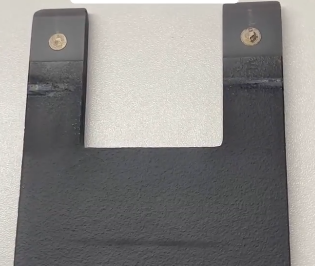
Silver contacts on silicon nitride ceramic heating plates take a beating. High temperatures thermal cycling and mechanical stress eventually take their toll. When the contact degrades heating performance suffers.