Vacuum quenching of stainless steel is an advanced heat treatment process used to enhance hardness, strength, and wear resistance while preserving surface quality and dimensional accuracy. The process is carried out in a sealed vacuum furnace, which eliminates the presence of oxygen and prevents oxidation, scaling, and surface contamination during heating.
In this process, stainless steel components are heated uniformly to the required austenitizing temperature under high vacuum conditions. Once the desired temperature and soaking time are achieved, the parts are rapidly cooled by high-pressure inert gas such as nitrogen, argon, or helium. This controlled gas quenching enables precise cooling rates, resulting in a uniform microstructure and reduced risk of distortion or cracking compared to conventional oil or water quenching.
Vacuum quenching is especially suitable for martensitic and precipitation-hardening stainless steels used in aerospace, medical, tooling, and precision engineering applications. The process delivers clean, bright surfaces with consistent mechanical properties, often eliminating the need for post-treatment cleaning. Overall, vacuum quenching provides superior performance, reliability, and repeatability for high-quality stainless steel components.
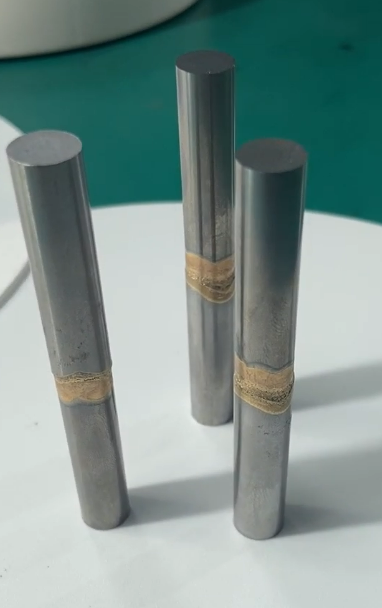
The components shown above are H13 tool steel and tungsten carbide assemblies processed in a Normantherm vacuum brazing furnace. This material combination is commonly used in punching tools, wear parts, forming dies, and cutting applications where both toughness and wear resistance are required.
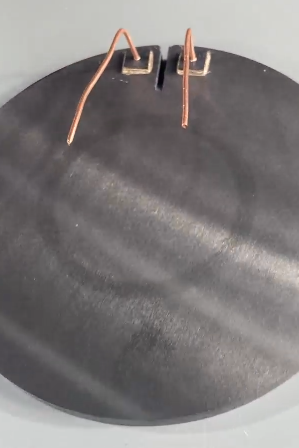
A silicon carbide heating plate is built for extreme temperatures. But the electrode connection is often the weakest link. Poor welding creates resistance heat buildup and premature failure.
Vacuum brazing of carbon steel with stainless steel is an advanced joining process widely used in industrial, automotive, aerospace, and precision engineering applications where high-strength and leak-free assemblies are required.