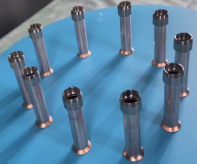
Vacuum brazing of titanium alloy and copper is a highly specialized joining technique used to achieve strong, clean, and thermally efficient bonds between these two dissimilar metals. Titanium alloys offer excellent strength-to-weight ratio and corrosion resistance, while copper provides superior thermal and electrical conductivity. However, their vastly different melting points and thermal expansion rates make conventional welding difficult — making vacuum brazing the ideal solution.
In this process, the titanium and copper components are joined using an active brazing alloy, often containing titanium, silver, or nickel to promote metallurgical bonding at the interface. The assembly is heated in a high-vacuum furnace, which prevents oxidation and contamination, ensuring a smooth, void-free joint. The filler metal melts and flows through capillary action, creating a uniform and hermetic seal without melting the base materials.
The resulting joint combines the mechanical strength of titanium with the thermal and electrical conductivity of copper, making it invaluable for aerospace thermal control systems, electronic packaging, heat exchangers, and vacuum devices. This technique ensures durability, precision, and performance under demanding conditions, reflecting the advanced material engineering standards required in modern high-technology industries.
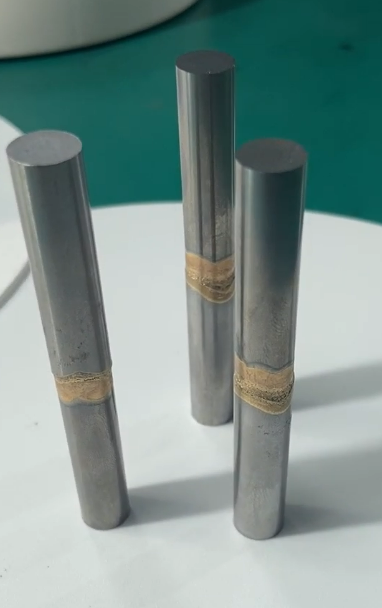
The components shown above are H13 tool steel and tungsten carbide assemblies processed in a Normantherm vacuum brazing furnace. This material combination is commonly used in punching tools, wear parts, forming dies, and cutting applications where both toughness and wear resistance are required.
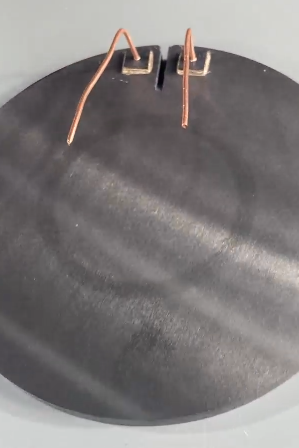
A silicon carbide heating plate is built for extreme temperatures. But the electrode connection is often the weakest link. Poor welding creates resistance heat buildup and premature failure.
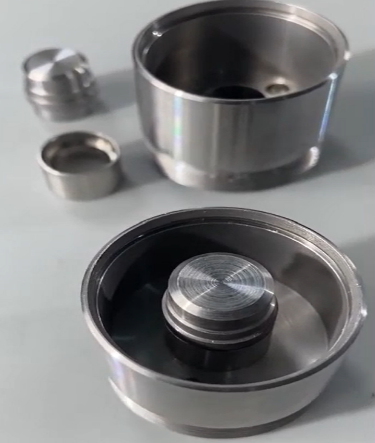
Vacuum brazing of carbon steel with stainless steel is an advanced joining process widely used in industrial, automotive, aerospace, and precision engineering applications where high-strength and leak-free assemblies are required.