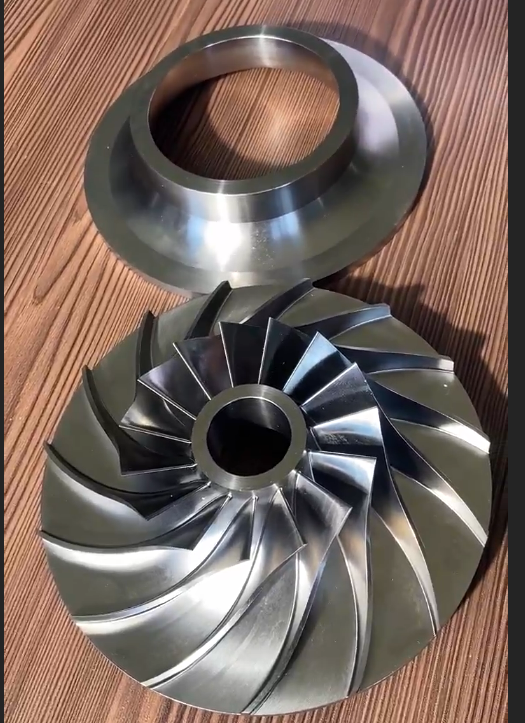
In the aerospace industry, turbine blades operate under extreme temperatures, high pressure, and intense centrifugal force. Any failure in bonding or structural integrity can lead to catastrophic consequences. This is why TC4 titanium alloy (Ti-6Al-4V) is widely used — offering excellent strength-to-weight ratio, corrosion resistance, and thermal endurance.
However, joining titanium components requires precision-controlled brazing technology to avoid oxidation and structural weakness.
Normantherm specializes in vacuum brazing of titanium alloys, delivering:
Oxidation-free joints with metallurgical bonding
No distortion or microcrack formation
Consistent performance across batch production
High fatigue resistance for turbine environments
Whether for aero-engine turbine blades, turbocharger impellers, or UAV propulsion units, Normantherm ensures flight-grade reliability through controlled vacuum processing.
By combining advanced furnace technology with aerospace-grade standards, we help manufacturers achieve lightweight efficiency without compromising durability.
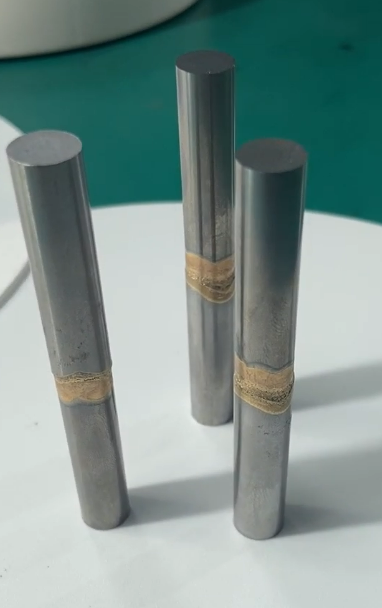
The components shown above are H13 tool steel and tungsten carbide assemblies processed in a Normantherm vacuum brazing furnace. This material combination is commonly used in punching tools, wear parts, forming dies, and cutting applications where both toughness and wear resistance are required.
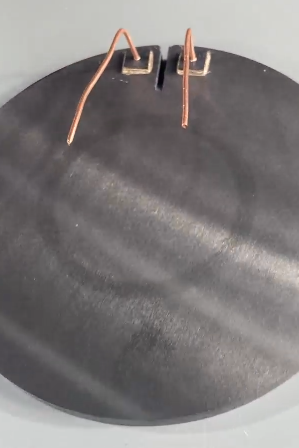
A silicon carbide heating plate is built for extreme temperatures. But the electrode connection is often the weakest link. Poor welding creates resistance heat buildup and premature failure.
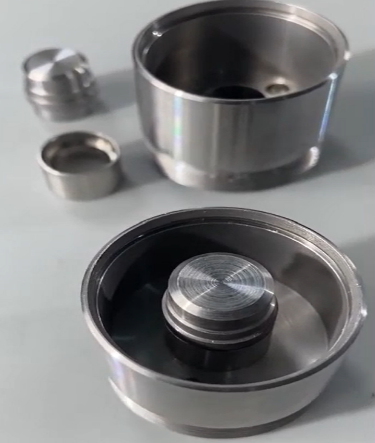
Vacuum brazing of carbon steel with stainless steel is an advanced joining process widely used in industrial, automotive, aerospace, and precision engineering applications where high-strength and leak-free assemblies are required.