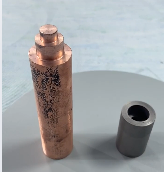
Tungsten-based materials are widely used in industries that demand extreme durability, high thermal resistance, and excellent electrical conductivity. Tungsten steel offers outstanding hardness and wear resistance, while tungsten copper alloy combines the conductivity of copper with the strength of tungsten. Together, they are essential in electronics, aerospace, energy systems, and high-performance tooling.
However, welding these two materials presents unique challenges due to their different thermal expansion coefficients and metallurgical properties. Traditional welding methods often lead to cracks, porosity, or weak bonding.
This is where Normantherm’s vacuum furnace technology plays a crucial role. By using vacuum brazing and advanced welding processes, we ensure:
Strong, defect-free joints between tungsten steel and tungsten copper alloy.
Enhanced conductivity for electronic and thermal applications.
Uniform bonding with minimal stress and distortion.
High precision and repeatability, suitable for large-scale industrial use.
Applications of these welded components include electrical contacts, heat sinks, aerospace engine parts, and high-temperature tooling.
At Normantherm, we continue to support industries worldwide with customized furnace solutions that meet the toughest material joining requirements.
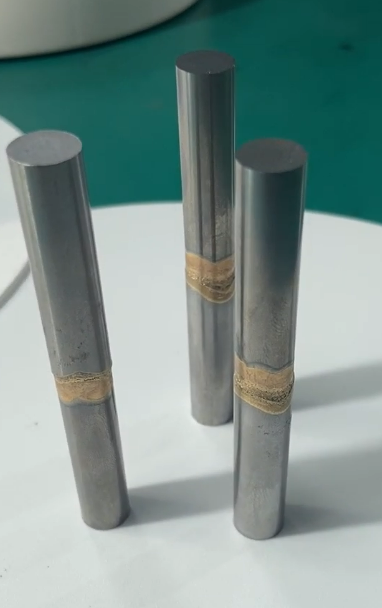
The components shown above are H13 tool steel and tungsten carbide assemblies processed in a Normantherm vacuum brazing furnace. This material combination is commonly used in punching tools, wear parts, forming dies, and cutting applications where both toughness and wear resistance are required.
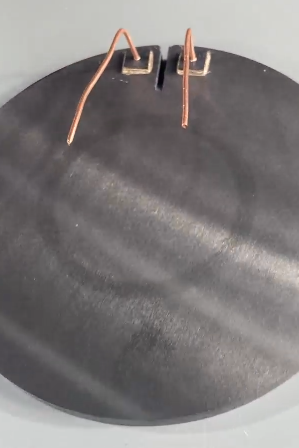
A silicon carbide heating plate is built for extreme temperatures. But the electrode connection is often the weakest link. Poor welding creates resistance heat buildup and premature failure.
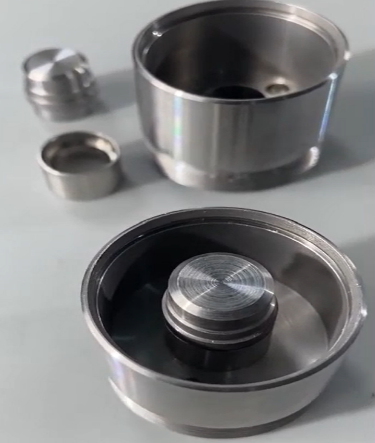
Vacuum brazing of carbon steel with stainless steel is an advanced joining process widely used in industrial, automotive, aerospace, and precision engineering applications where high-strength and leak-free assemblies are required.