Titanium Foil Annealing for Aerospace Applications
Normantherm•10/5/2025
Titanium is widely used in aerospace engineering due to its high strength-to-weight ratio and excellent corrosion resistance. However, during cold working and forming, titanium accumulates internal stress, leading to brittleness or deformation failure. To ensure reliability during manufacturing and final operation, vacuum annealing becomes essential.
Normantherm’s vacuum furnaces provide controlled atmosphere annealing, enabling:
Stress relief without warping or cracking
Enhanced plasticity for deep drawing and forming
Oxidation-free surfaces without discoloration or scale formation
High uniformity across thin foil structures
This process is crucial for manufacturing thermal shielding layers, sensor enclosures, aerospace ducting, and lightweight brackets. By combining temperature precision with contamination-free environments, Normantherm ensures titanium components meet flight-grade standards before further processing or assembly.
From raw foil to flight-ready materials, Normantherm delivers metallurgical confidence for aerospace innovators.
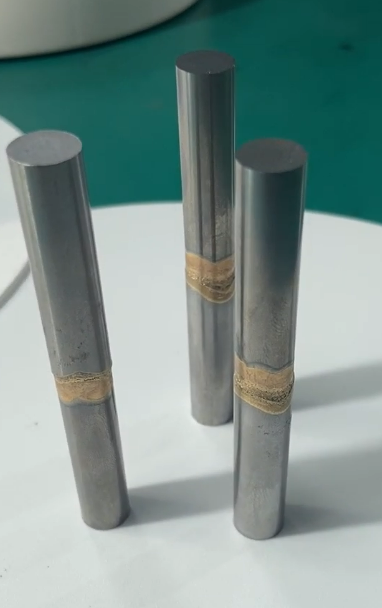
The components shown above are H13 tool steel and tungsten carbide assemblies processed in a Normantherm vacuum brazing furnace. This material combination is commonly used in punching tools, wear parts, forming dies, and cutting applications where both toughness and wear resistance are required.
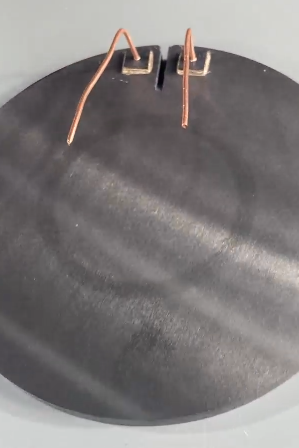
A silicon carbide heating plate is built for extreme temperatures. But the electrode connection is often the weakest link. Poor welding creates resistance heat buildup and premature failure.
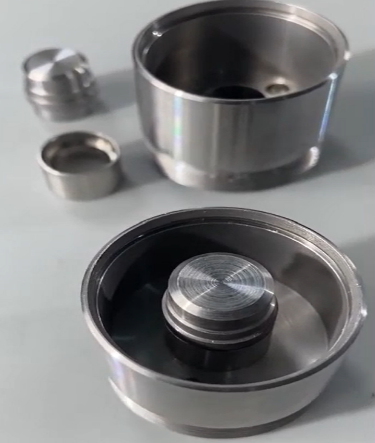
Vacuum brazing of carbon steel with stainless steel is an advanced joining process widely used in industrial, automotive, aerospace, and precision engineering applications where high-strength and leak-free assemblies are required.