Titanium Alloy Vacuum Brazing for High-Performance Finished Products
Normantherm•12/30/2025
Titanium alloys are essential materials in industries where strength-to-weight ratio, corrosion resistance, and reliability are critical. From aerospace structures to medical devices, titanium alloy components must meet strict performance and quality standards.
Vacuum brazing is one of the most effective joining methods for producing high-integrity titanium alloy finished products.
Why Vacuum Brazing Is Ideal for Titanium Alloys
Titanium is highly reactive at elevated temperatures and oxidizes easily in conventional atmospheres. Vacuum brazing eliminates oxygen and contaminants, enabling clean and consistent joint formation.
Key advantages include:
Oxide-free brazed joints
High joint strength and reliability
Minimal distortion of complex assemblies
Uniform heating and cooling
Compatibility with intricate component designs
These benefits make vacuum brazing suitable for demanding applications.
Properties of Vacuum-Brazed Titanium Alloy Finished Products
Vacuum-brazed titanium alloy components retain the inherent properties of titanium while achieving strong and precise joints.
Performance characteristics include:
High mechanical strength
Excellent corrosion resistance
Stable performance under thermal cycling
Clean joint surfaces without flux residue
Long service life in critical applications
Such properties are essential for safety-critical industries.
Applications in India’s Aerospace and Advanced Engineering Sector
India’s aerospace and advanced engineering industries are growing rapidly, driven by defense manufacturing, space programs, and precision engineering initiatives. Vacuum-brazed titanium alloy products are widely used in:
Aerospace structural assemblies
Aircraft engine components
Medical implants and surgical instruments
Precision mechanical systems
High-quality brazing is essential to meet regulatory and performance requirements.
Normantherm’s Role in Titanium Alloy Vacuum Brazing
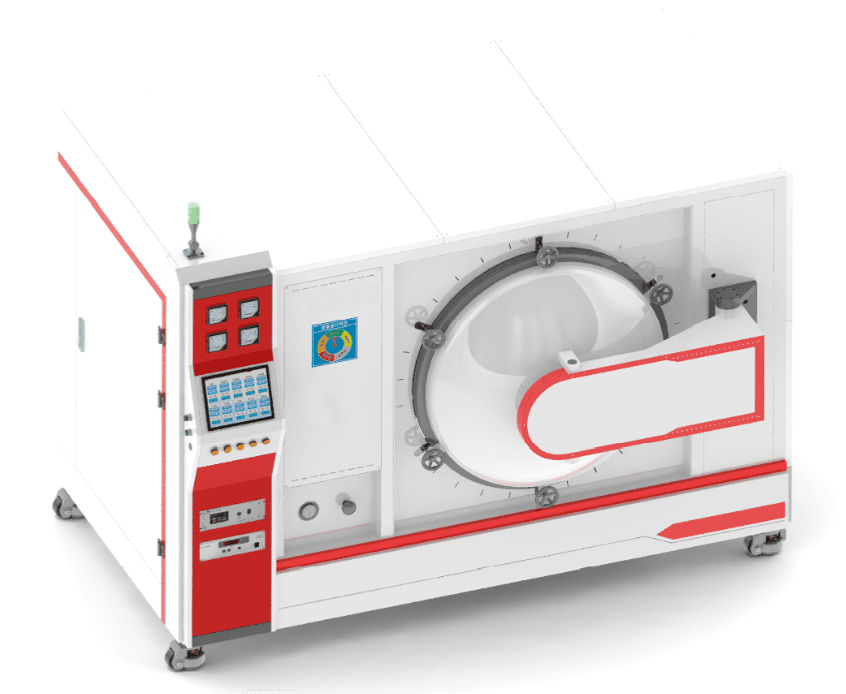
Normantherm designs and manufactures advanced vacuum brazing furnaces specifically engineered for reactive materials like titanium alloys. Our solutions offer:
High-vacuum environments to prevent oxidation
Accurate temperature uniformity
Consistent brazing quality across batches
Support for complex and multi-material assemblies
Reliable operation for industrial-scale production
By enabling precision brazing, Normantherm supports manufacturers serving India’s aerospace, medical, and advanced engineering markets.
Conclusion
Titanium alloy vacuum brazing plays a vital role in producing high-performance finished products for demanding industries. Controlled vacuum environments ensure strong, clean, and reliable joints. With advanced vacuum brazing technology, Normantherm continues to support the development of high-quality titanium alloy components for India and global markets.
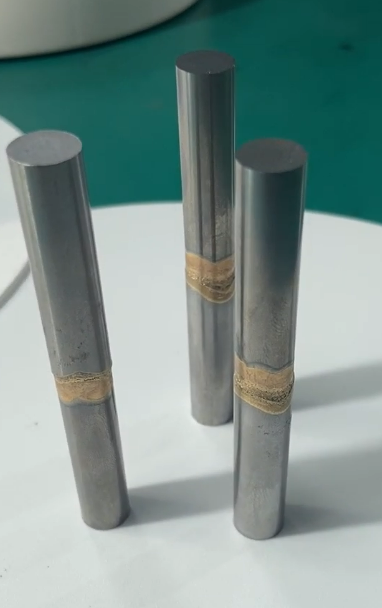
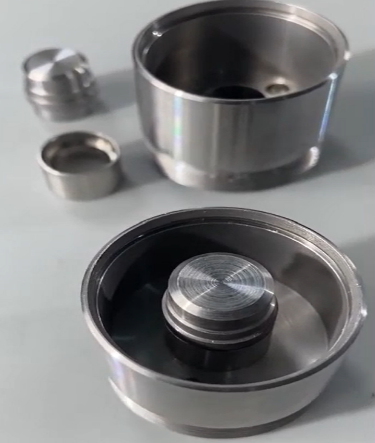
The components shown above are H13 tool steel and tungsten carbide assemblies processed in a Normantherm vacuum brazing furnace. This material combination is commonly used in punching tools, wear parts, forming dies, and cutting applications where both toughness and wear resistance are required.
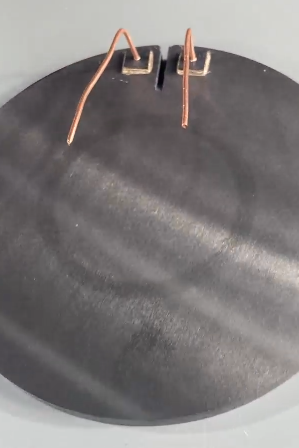
A silicon carbide heating plate is built for extreme temperatures. But the electrode connection is often the weakest link. Poor welding creates resistance heat buildup and premature failure.
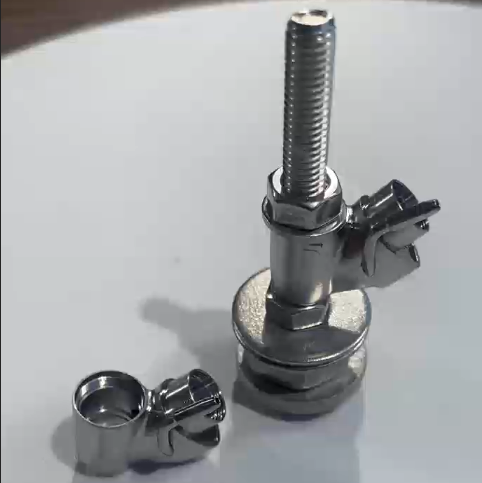
Vacuum brazing of carbon steel with stainless steel is an advanced joining process widely used in industrial, automotive, aerospace, and precision engineering applications where high-strength and leak-free assemblies are required.