Titanium Alloy Turbine Blade Vacuum Brazing in the Aerospace Industry
Normantherm•10/13/2025
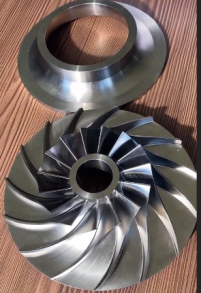
In the aerospace industry, precision and reliability are critical in the manufacture of turbine components. TC4 titanium alloy (Ti-6Al-4V), known for its exceptional strength-to-weight ratio, corrosion resistance, and high-temperature performance, is widely used in aircraft engine turbine blades. To join complex titanium structures without compromising their properties, engineers employ the vacuum brazing process — a clean, controlled, and highly reliable bonding technique.
During vacuum brazing, TC4 components are assembled with a thin layer of titanium-based filler metal and heated in a high-vacuum furnace. The filler melts and flows into the joint by capillary action, forming a uniform metallurgical bond without melting the base material. The vacuum environment eliminates oxidation and contamination, producing joints with excellent strength, ductility, and fatigue resistance.
This technology is vital for turbine blade fabrication and repair, where dimensional accuracy, smooth surface finish, and long-term performance are crucial. The brazed joints ensure structural integrity under extreme conditions of heat, pressure, and vibration. As a result, TC4 vacuum-brazed turbine blades play a key role in improving engine efficiency, reducing weight, and enhancing the overall reliability of modern aerospace propulsion systems.
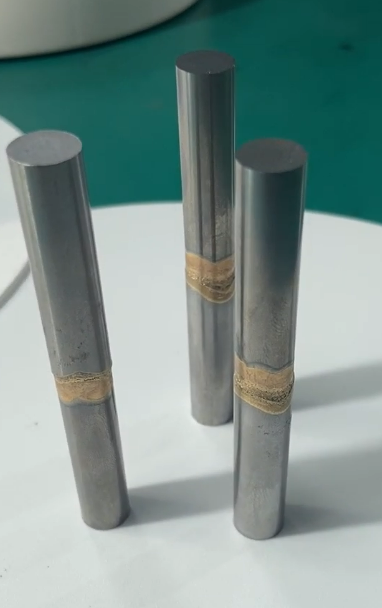
The components shown above are H13 tool steel and tungsten carbide assemblies processed in a Normantherm vacuum brazing furnace. This material combination is commonly used in punching tools, wear parts, forming dies, and cutting applications where both toughness and wear resistance are required.
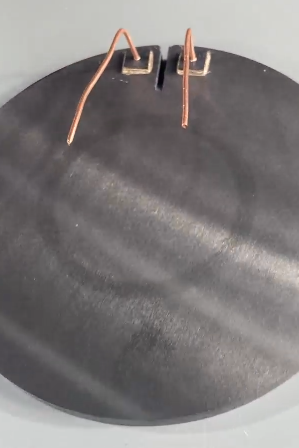
A silicon carbide heating plate is built for extreme temperatures. But the electrode connection is often the weakest link. Poor welding creates resistance heat buildup and premature failure.
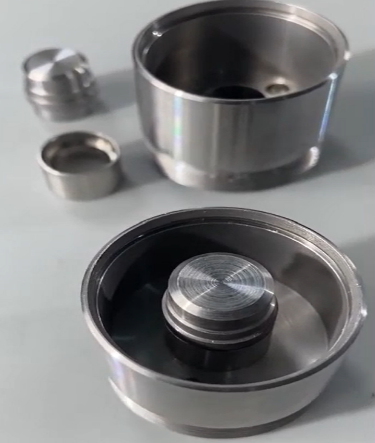
Vacuum brazing of carbon steel with stainless steel is an advanced joining process widely used in industrial, automotive, aerospace, and precision engineering applications where high-strength and leak-free assemblies are required.