TC4 and 4J29 Welding Products in the Aerospace Industry
Normantherm•9/24/2025
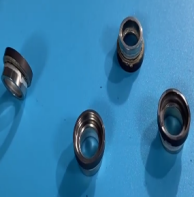
In aerospace engineering, the joining of dissimilar materials is critical for developing lightweight, high-performance components. TC4 (Ti-6Al-4V titanium alloy) is valued for its excellent strength-to-weight ratio and corrosion resistance, while 4J29 (Kovar alloy) offers controlled thermal expansion and outstanding hermetic sealing properties. Welding these two materials presents challenges due to their different physical and metallurgical characteristics; however, advanced techniques such as vacuum brazing and diffusion welding enable the creation of reliable joints.
The resulting TC4–4J29 welded products combine the mechanical strength of titanium with the thermal compatibility and sealing performance of Kovar. In the aerospace industry, these assemblies are widely applied in satellite housings, avionics packaging, hermetic feedthroughs, and engine sensor systems, where both lightweight construction and thermal stability are essential. By integrating these two advanced materials through precision welding, engineers achieve durable, high-performance components capable of withstanding extreme aerospace environments.
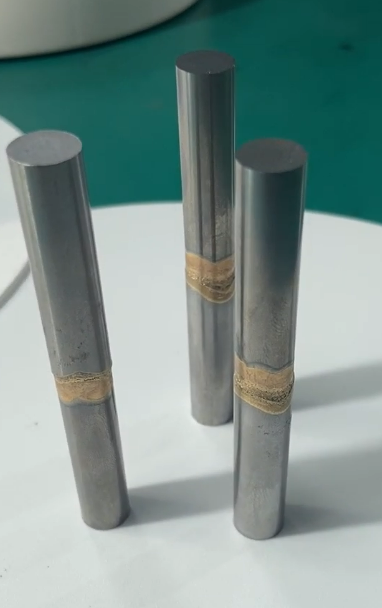
The components shown above are H13 tool steel and tungsten carbide assemblies processed in a Normantherm vacuum brazing furnace. This material combination is commonly used in punching tools, wear parts, forming dies, and cutting applications where both toughness and wear resistance are required.
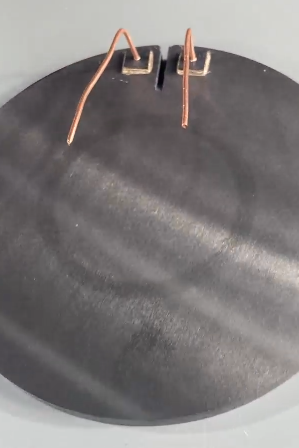
A silicon carbide heating plate is built for extreme temperatures. But the electrode connection is often the weakest link. Poor welding creates resistance heat buildup and premature failure.
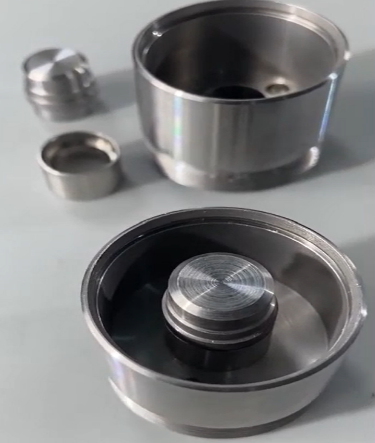
Vacuum brazing of carbon steel with stainless steel is an advanced joining process widely used in industrial, automotive, aerospace, and precision engineering applications where high-strength and leak-free assemblies are required.