Precision Joining of TC4 Titanium and 4J29 Kovar for Aerospace Applications
Normantherm•12/15/2025
In aerospace systems, the integration of dissimilar materials is often required to achieve optimal mechanical strength, thermal stability and hermetic sealing. TC4 (Ti-6Al-4V titanium alloy) offers high specific strength, fatigue resistance and corrosion stability, while 4J29 (Kovar alloy) provides a closely matched coefficient of thermal expansion for ceramic and glass interfaces. Joining these two materials requires advanced solid-state or controlled-atmosphere techniques due to their large differences in melting point, thermal conductivity and metallurgical behavior.
Joining Processes and Parameters
TC4–4J29 assemblies are typically produced using vacuum brazing or diffusion welding, depending on joint geometry and performance requirements.
Vacuum brazing is carried out in high-vacuum furnaces (10⁻⁴–10⁻⁵ mbar) to prevent oxidation of titanium and ensure clean wetting of the joint surfaces. Nickel-based or silver-based brazing alloys, often modified with active elements are used to promote bonding. Brazing temperatures generally range from 850–980 °C with controlled heating and cooling rates to minimize residual stress. Diffusion welding is performed at temperatures between 800–900 °C under applied pressure, typically in a vacuum or inert atmosphere. This process relies on atomic diffusion across the interface rather than filler metal flow, resulting in joints with excellent dimensional accuracy and high temperature stability.
Interface Structure and Metallurgical Behavior
At the TC4–4J29 interface, controlled inter diffusion of elements such as Ni, Fe, Ti and Co leads to the formation of thin reaction layers. Proper process control is essential to limit excessive intermetallic compound growth, which could otherwise reduce joint toughness. Optimized thermal cycles produce a uniform, continuous bonding layer that balances strength and ductility while maintaining thermal expansion compatibility.
Performance in Aerospace Applications
TC4–4J29 welded components exhibit: high mechanical integrity under vibration and cyclic loading stable performance during repeated thermal cycling excellent hermetic sealing for high-vacuum environments
These characteristics make them ideal for satellite housings, avionics packages, hermetic feedthroughs, engine sensor assemblies and space-borne electronic modules where failure tolerance is extremely low.
By combining precision joining techniques with strict control of process parameters and interface microstructure, aerospace engineers can reliably integrate TC4 titanium and 4J29 Kovar into high-performance components capable of operating in extreme aerospace environments.
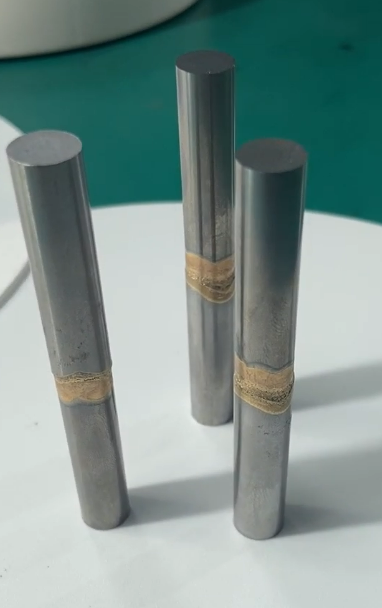
The components shown above are H13 tool steel and tungsten carbide assemblies processed in a Normantherm vacuum brazing furnace. This material combination is commonly used in punching tools, wear parts, forming dies, and cutting applications where both toughness and wear resistance are required.
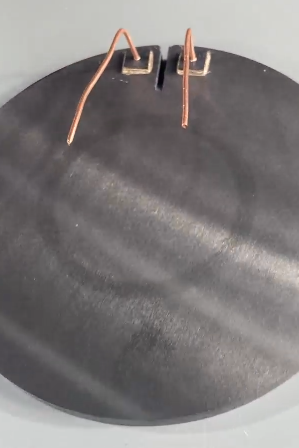
A silicon carbide heating plate is built for extreme temperatures. But the electrode connection is often the weakest link. Poor welding creates resistance heat buildup and premature failure.
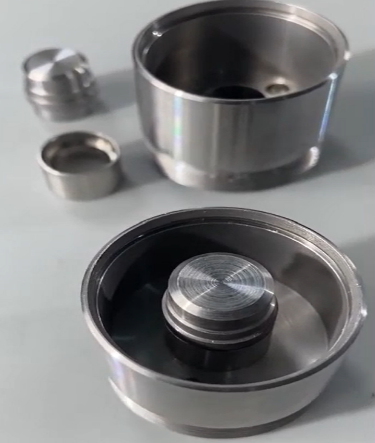
Vacuum brazing of carbon steel with stainless steel is an advanced joining process widely used in industrial, automotive, aerospace, and precision engineering applications where high-strength and leak-free assemblies are required.