
Vacuum Welding of Carbon Steel and Stainless Steel for Industrial Manufacturing
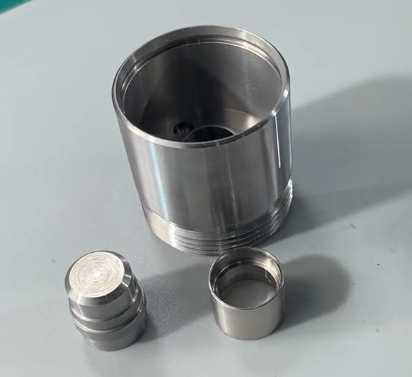
The joining of carbon steel and stainless steel is widely required in modern industrial manufacturing. By combining the strength and affordability of carbon steel with the corrosion resistance of stainless steel, manufacturers can produce cost-effective and high-performance industrial components.
However, welding these dissimilar metals requires advanced process control to ensure strong, reliable joints without compromising material properties. Vacuum welding has become an effective solution for achieving high-quality bonding between carbon steel and stainless steel.
Understanding Carbon Steel and Stainless Steel
Carbon Steel is widely used in structural and industrial applications because of its high strength, durability, and cost-effectiveness.
Stainless Steel contains chromium and other alloying elements that provide excellent corrosion resistance and long-term durability.
Combining these materials allows manufacturers to optimize both performance and production cost.
Challenges in Welding Dissimilar Metals
Joining carbon steel and stainless steel presents several technical challenges due to differences in material composition and thermal behavior.
Common issues include:
- Different thermal expansion rates
- Formation of brittle phases at the joint interface
- Oxidation during high-temperature processing
- Residual stress and distortion after welding
Without proper control, these issues can reduce joint strength and reliability.
Advantages of Vacuum Welding Technology
Vacuum welding provides a highly controlled environment that minimizes contamination and improves joint quality.
Key benefits include:
- Oxidation-Free Processing
The vacuum environment eliminates oxygen, preventing oxidation and ensuring clean surfaces.
- Strong Metallurgical Bonding
Precise temperature control allows uniform bonding between carbon steel and stainless steel.
- Reduced Thermal Distortion
Controlled heating and cooling cycles minimize stress and deformation.
- High Process Consistency
Vacuum furnace systems enable repeatable and stable production results.
These advantages are critical for industrial applications requiring high reliability.
Performance Benefits of Vacuum-Welded Assemblies
Components produced through vacuum welding of carbon steel and stainless steel offer several important advantages:
- High structural strength
- Improved corrosion resistance in critical areas
- Enhanced durability and service life
- Stable performance under thermal and mechanical loads
- Reliable joint integrity for industrial applications
These benefits make vacuum welding suitable for demanding manufacturing environments.
Applications in Industrial Sectors
Welded carbon steel and stainless steel components are widely used in:
- Industrial fabrication systems
- Pressure vessels and piping systems
- Heavy machinery manufacturing
- Chemical processing equipment
- Power generation and infrastructure projects
As industrial standards continue to improve, demand for reliable dissimilar metal welding solutions is increasing rapidly.
Normantherm Vacuum Welding Solutions
At Normantherm, advanced vacuum furnace systems are designed for precision welding and brazing of dissimilar materials.
Our systems provide:
- High-vacuum processing environments
- Accurate temperature control and uniform heating
- Reliable joining of complex material combinations
- Consistent and repeatable production quality
These capabilities help manufacturers achieve durable and high-performance welded components.
Conclusion
Vacuum welding of carbon steel and stainless steel enables manufacturers to combine strength, corrosion resistance, and cost efficiency in a single component. By ensuring clean and reliable joints, vacuum welding supports the growing demands of modern industrial manufacturing.
With advanced furnace technology and proven process expertise, Normantherm continues to provide dependable solutions for precision material joining and industrial production.