Kovar Alloy Welding with Alumina Ceramics: A Critical Innovation for High-Reliability Electronics

Kovar alloy (Fe-Ni-Co) and alumina (Al₂O₃) ceramics are widely used in high-precision electronic components, especially where vacuum sealing, magnetic stability, and thermal expansion compatibility are essential. These two materials are fundamental in:
- Semiconductor packaging
- Sensor housings
- Micro-electronic modules
- Vacuum devices
- Hermetically sealed connectors
- Aerospace & defense electronics
However, joining Kovar and alumina ceramic is technically challenging due to significant differences in thermal expansion, bonding characteristics, and wettability. This is why vacuum welding and vacuum brazing technologies have become the industry standard.
Why Vacuum Welding is Essential for Kovar + Alumina Ceramic Bonding
1. Perfect Hermetic Sealing
Semiconductor and electronic components require airtight sealing to protect against moisture and contamination.
Vacuum welding ensures leakage rates suitable for high-reliability applications.
2. Zero Oxidation, Zero Contamination
Kovar oxidizes quickly at high temperatures. Vacuum eliminates this issue completely.
3. Precision Thermal Control
Matching the thermal expansion between Kovar and alumina is critical to avoid cracking.
Normantherm furnaces ensure ultra-stable temperature curves.
4. High Adhesion Strength
The vacuum environment promotes strong diffusion bonding, supporting long-life components.
5. Superior Electrical & Mechanical Stability
This makes the bonded structure ideal for sensors, power electronics, high-frequency devices, and precision modules.
Applications in the Electronics & Semiconductor Industry
A strong Kovar–ceramic bond is used in:
- Semiconductor packaging housings
- MEMS sensors
- Optical device housings
- Laser module packages
- High-reliability connectors
- Telecommunications components
- Aerospace-grade electronic modules
With India accelerating its Make in India – Electronics Manufacturing Mission, demand for high-precision ceramic-metal bonding is rising rapidly.
Why This Process Matters for the Indian Electronics Sector
India’s growth in the following sectors requires reliable Kovar-ceramic welding:
- Semiconductor assembly & packaging
- Sensor and IoT device manufacturing
- Defense electronics
- Telecom & 5G equipment
- Medical device electronics
Indian manufacturers increasingly require defect-free hermetic sealing, stable thermal performance, and high bond reliability — all of which are achieved using Normantherm’s vacuum furnaces.
Normantherm’s Role in Advancing Kovar–Ceramic Bonding Technology
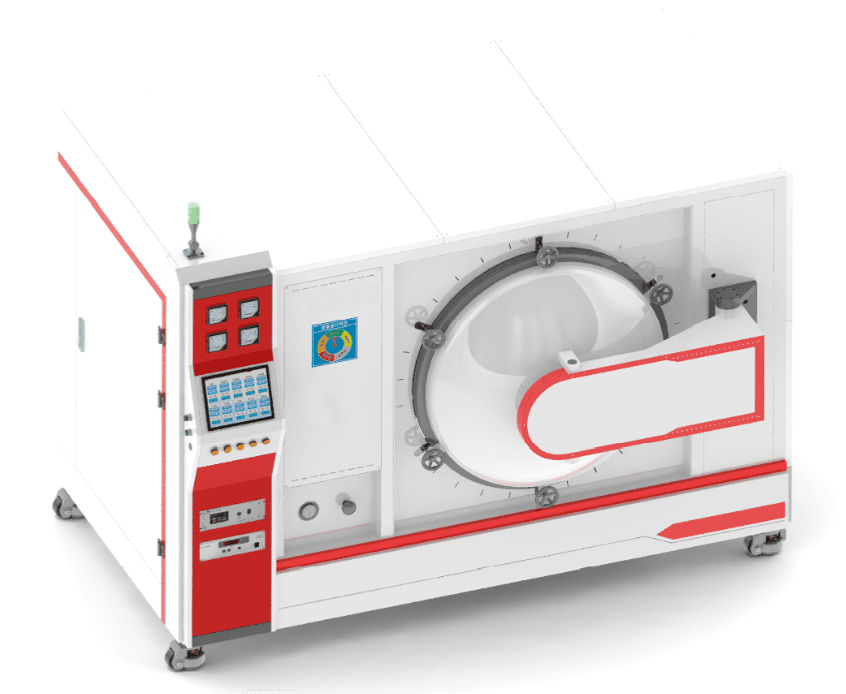
Normantherm provides high-precision vacuum brazing and vacuum welding furnaces that are specifically optimized for ceramic-to-metal joining.
Key Features Benefiting Electronics Manufacturers:
1. Deep Vacuum Levels (10⁻³–10⁻⁶ Pa)
Ensures oxidation-free surfaces, essential for Kovar bonding.
2. Highly Accurate Temperature Control
Enables stress-free bonding and prevents ceramic cracking.
3. Uniform Heating Across All Zones
Critical for maintaining the thermal compatibility between Kovar and alumina.
4. Mirror-Bright, Contamination-Free Surfaces
Ideal for industries requiring long-term electrical stability.
5. Custom Solutions for Semiconductor & Electronics Factories
Normantherm designs both standard and fully customized furnaces to meet industry-specific requirements.
Conclusion
The vacuum welding of Kovar alloy with alumina ceramics forms the backbone of many high-reliability electronic and semiconductor components. This process ensures:
- Stable hermetic sealing
- Zero oxidation
- High bonding strength
- Long-term reliability
With India’s rapidly expanding electronics and semiconductor manufacturing sectors, the demand for world-class ceramic-metal bonding technology is higher than ever.
Normantherm is proud to support manufacturers globally and in India with advanced vacuum furnace solutions engineered for precision, consistency, and high-reliability electronic packaging.