
Heat Treatment of Phosphor Bronze Springs for Enhanced Resilience and Performance
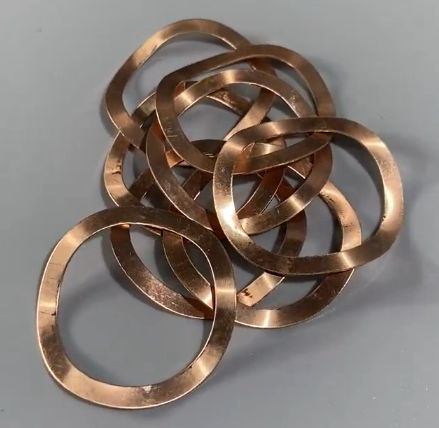
Phosphor bronze springs are widely used in industries that require high fatigue resistance, corrosion resistance, and reliable mechanical performance. These springs play a critical role in electrical connectors, automotive components, and precision instruments.
To achieve optimal performance, phosphor bronze springs undergo controlled heat treatment processes that improve their resilience, elasticity, and durability.
What Is Phosphor Bronze?
Phosphor Bronze is an alloy primarily composed of copper, tin, and a small amount of phosphorus. It is known for its excellent mechanical and electrical properties.
Key characteristics include:
- High fatigue resistance
- Good corrosion resistance
- Excellent electrical conductivity
- Strong wear resistance
- Good formability for spring applications
These properties make phosphor bronze an ideal material for springs used in demanding environments.
Importance of Heat Treatment in Spring Manufacturing
Heat treatment is a critical step in optimizing the mechanical properties of phosphor bronze springs.
Without proper heat treatment, springs may lack the required elasticity or fail prematurely under repeated loading conditions.
Heat treatment helps to:
- Improve resilience and elasticity
- Enhance fatigue life
- Relieve internal stresses from forming processes
- Stabilize the material structure
This ensures consistent performance over long operating cycles.
Heat Treatment Process for Phosphor Bronze Springs
The heat treatment process typically involves controlled heating followed by precise cooling.
- Heating
Springs are heated to a specific temperature to alter their microstructure and relieve internal stresses.
- Soaking Phase
Maintaining the temperature allows uniform heat distribution and ensures consistent treatment throughout the material.
- Controlled Cooling
Cooling at a controlled rate helps achieve the desired mechanical properties without causing distortion or brittleness.
These steps must be carefully managed to achieve optimal results.
Benefits of Heat-Treated Phosphor Bronze Springs
Heat-treated phosphor bronze springs offer several performance advantages:
- Improved elasticity and resilience
- Enhanced fatigue resistance under cyclic loading
- Stable performance in harsh environments
- Reduced risk of deformation and failure
- Extended service life
These benefits are essential for applications requiring long-term reliability.
Applications in Indian Manufacturing Industries
In India, phosphor bronze springs are widely used in:
- Electrical connectors and switchgear
- Automotive components
- Industrial machinery
- Telecommunications equipment
- Precision instruments
As industries continue to demand higher reliability and performance, heat treatment becomes increasingly important.
Normantherm Heat Treatment Solutions
At Normantherm, advanced heat treatment furnaces are designed to deliver precise and consistent results for spring materials like phosphor bronze.
Our systems provide:
- Controlled atmosphere processing
- Accurate temperature regulation
- Uniform heat distribution
- Repeatable and reliable treatment cycles
These capabilities help manufacturers produce high-quality springs with improved performance.
Conclusion
Heat treatment of phosphor bronze springs is essential for enhancing resilience, elasticity, and long-term durability. By refining the material structure and relieving internal stresses, manufacturers can ensure consistent performance in demanding applications.
With advanced furnace technology and precise process control, Normantherm continues to support the production of high-performance spring components for modern industrial applications.