
Heat treatment of phosphor bronze springs
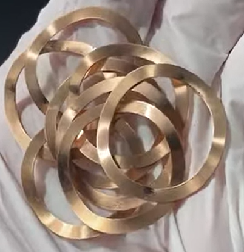
Heat treatment of phosphor bronze springs is an important process used to improve the mechanical properties, elasticity, and durability of the springs. Phosphor bronze, an alloy of copper, tin, and phosphorus, is widely used in electrical, automotive, and precision engineering industries because of its excellent corrosion resistance, fatigue strength, and electrical conductivity.
The heat treatment process usually involves stress relieving after cold forming or spring manufacturing. Springs are heated at a controlled temperature, typically between 250°C and 350°C, in a protective atmosphere or clean furnace environment to prevent oxidation and discoloration. The material is then held at the required temperature for a specific period and cooled gradually.
This treatment reduces internal stresses generated during forming operations, improves spring stability, enhances fatigue resistance, and maintains consistent spring performance during long-term operation. Proper heat treatment also helps phosphor bronze springs retain their elasticity and dimensional accuracy even under repeated loading conditions.
Due to these advantages, heat-treated phosphor bronze springs are commonly used in electrical connectors, switches, relays, precision instruments, and electronic components where reliable spring action and conductivity are essential.