
Heat treatment of 316L stainless steel
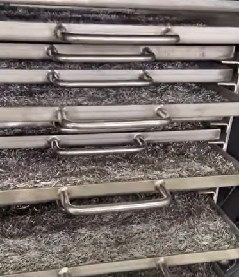
Heat treatment of 316L stainless steel is an important process used to improve corrosion resistance, relieve internal stresses, and maintain the material’s mechanical properties for industrial applications. 316L stainless steel is a low-carbon austenitic stainless steel widely used in semiconductor, medical, chemical processing, food processing, and marine industries due to its excellent corrosion resistance and high-temperature performance.
The heat treatment process for 316L stainless steel commonly involves solution annealing, where the material is heated to temperatures around 1010°C to 1120°C and then rapidly cooled, usually by water quenching. This process dissolves carbide precipitates, restores corrosion resistance, and improves the overall microstructure of the material.
Stress-relief heat treatment may also be performed at lower temperatures to reduce residual stresses generated during machining, welding, or forming operations without significantly affecting corrosion resistance. Controlled atmosphere or vacuum furnaces are often used to prevent oxidation and maintain a clean surface finish.
Proper heat treatment of 316L stainless steel enhances durability, dimensional stability, and resistance to corrosion and contamination, making it highly suitable for precision components, vacuum systems, semiconductor equipment, and high-purity industrial applications.