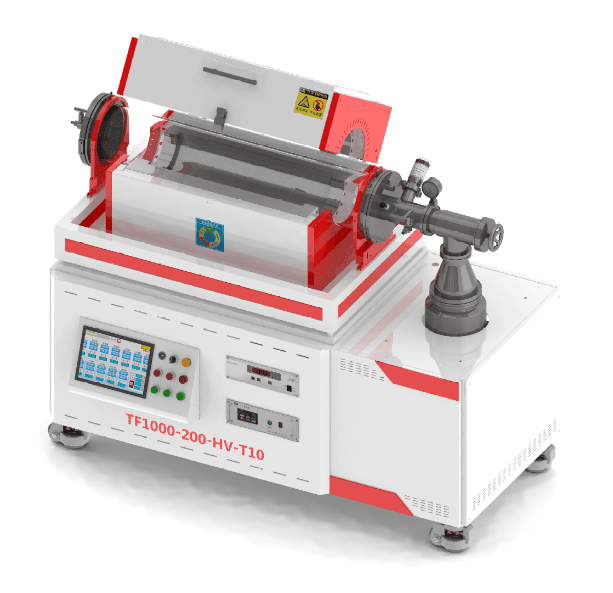
Heat Treatment of 301 Stainless Steel PIN Probes for the Electronics & Semiconductor Testing Industry

The electronics and semiconductor testing industry relies on high-precision components to ensure that every circuit, PCB, and device leaving the production line meets strict quality standards. Among these critical components are PIN probes, often manufactured from 301 stainless steel, used in:
- PCB test fixtures and bed-of-nails setups
- Semiconductor device and socket testing
- In-circuit and functional test stations
- Automated test equipment (ATE) contact interfaces
These PIN probes must combine mechanical durability, elasticity, and stable electrical contact over thousands—or even millions—of test cycles.
Why 301 Stainless Steel is Used for PIN Probes
301 stainless steel is commonly used for precision mechanical parts due to:
- High strength after cold working
- Good elasticity and spring performance
- Corrosion resistance
- Suitability for fine, small-diameter geometries
However, manufacturing steps like forming, machining, and cold working can introduce internal stress and affect both dimensional stability and long-term performance. To achieve the required spring characteristics and reliability, controlled heat treatment becomes essential.
Role of Vacuum Heat Treatment in PIN Probe Performance
For 301 stainless steel PIN probes, vacuum heat treatment offers several important benefits:
- Stress relief after cold forming and machining
- Improved springback and elastic behavior, critical for repeated probing
- Enhanced fatigue resistance, extending probe service life
- Clean, oxidation-free surfaces that support stable electrical contact
Because the process is carried out under high vacuum, oxidation and surface contamination are minimized, reducing the need for heavy post-cleaning and preserving fine surface details.
Normantherm’s Contribution to the Electronics Testing Industry
Normantherm provides advanced vacuum furnace systems designed to handle small, high-precision stainless steel components, including 301 stainless steel PIN probes. Our technology helps electronics and semiconductor testing companies achieve:
- Accurate temperature control for consistent mechanical property tuning
- Uniform heating across large batches of small parts
- High vacuum levels that protect both surface quality and metallurgical integrity
- Repeatable, production-ready heat treatment cycles for mass manufacturing
This allows manufacturers to deliver PIN probes that maintain consistent contact force, minimal wear, and reliable electrical performance over extensive use.
Supporting Indian Electronics & Semiconductor Ecosystem
India is rapidly expanding its capabilities in electronics manufacturing, PCB assembly, and semiconductor testing, driven by government initiatives and growing domestic demand.
To support this growth, local manufacturers need high-quality test and measurement components, including durable PIN probes that can perform reliably on high-throughput production lines.
Normantherm supports Indian electronics and PCB manufacturers by:
- Providing vacuum heat treatment solutions suitable for PIN probes and other precision stainless steel parts
- Helping improve component life and reduce replacement frequency
- Enabling more consistent and accurate testing in PCB plants, EMS companies, and semiconductor test facilities
By integrating Normantherm vacuum furnaces into their process, Indian manufacturers can produce and process components that meet global electronics quality and reliability standards.
Conclusion
The heat treatment of 301 stainless steel PIN probes inside a Normantherm vacuum furnace is a key step in ensuring accurate, stable, and repeatable electrical testing in the electronics and semiconductor industry.
Through precise vacuum heat treatment, Normantherm helps manufacturers enhance mechanical performance, surface quality, and reliability of their test probes—ensuring that every PCB and device tested meets the high expectations of today’s electronics market.