What are Annealing and Quenching?

Annealing and quenching are two fundamental heat treatment processes used to modify the mechanical and physical properties of metals. Although both involve controlled heating and cooling, their objectives and outcomes are very different. In modern manufacturing, particularly in vacuum furnace applications, these processes are carefully engineered to achieve consistent material performance, dimensional stability, and long service life of components.
Annealing: Improving softness and structural uniformity
Annealing is a heat treatment process in which a metal is heated to a specific temperature, held there for a defined period, and then cooled slowly, usually inside the furnace. The primary purpose of annealing is to soften the material, relieve internal stresses, and refine the microstructure. This process restores ductility and improves machinability, making the material easier to form, cut, or further process.
How Annealing Improves Metal Structure and Stability

During annealing, the metal undergoes controlled microstructural transformation as it is heated above the recovery or recrystallization temperature and held long enough for internal rearrangement to occur. Dislocations created during prior mechanical processing are reduced, residual stresses are relieved, and new, strain-free grains begin to form and grow. This process results in a more uniform grain structure, improved ductility, and enhanced dimensional stability.
Vacuum annealing, performed in a vacuum furnace, offers significant advantages over conventional atmosphere annealing. The absence of oxygen prevents surface oxidation and decarburization, which is especially critical for alloy steels, tool steels, stainless steels, and precision components. Clean, bright surfaces are maintained, eliminating the need for post-treatment cleaning or pickling.
Quenching: Achieving high strength and hardness
Quenching is a heat treatment process used to increase the hardness and strength of metals, primarily steels. In this process, the material is first heated to its austenitizing temperature and held long enough to achieve a uniform phase transformation. It is then cooled rapidly using a controlled quenching medium such as oil, gas, or high-pressure inert gas in a vacuum furnace.
Metallurgical Effects of Quenching
The rapid cooling prevents the formation of equilibrium phases and instead locks the microstructure into a hard, martensitic form. This transformation significantly improves wear resistance and mechanical strength but also introduces internal stresses and brittleness. For this reason, quenching is almost always followed by tempering to balance hardness with toughness.
Vacuum quenching provides precise control over cooling rates and minimizes distortion, which is critical for high-precision parts such as dies, molds, gears, and aerospace components. Gas quenching in vacuum furnaces allows uniform heat extraction without the contamination, fire risk, or residue associated with liquid quenchants.
At Normantherm, vacuum furnace systems are designed to support a wide range of annealing and quenching applications, meeting the demands of modern metallurgy and high-precision manufacturing industries.
You may also like

Normanthan Broadens Its Impact Across Key High-Tech Industries
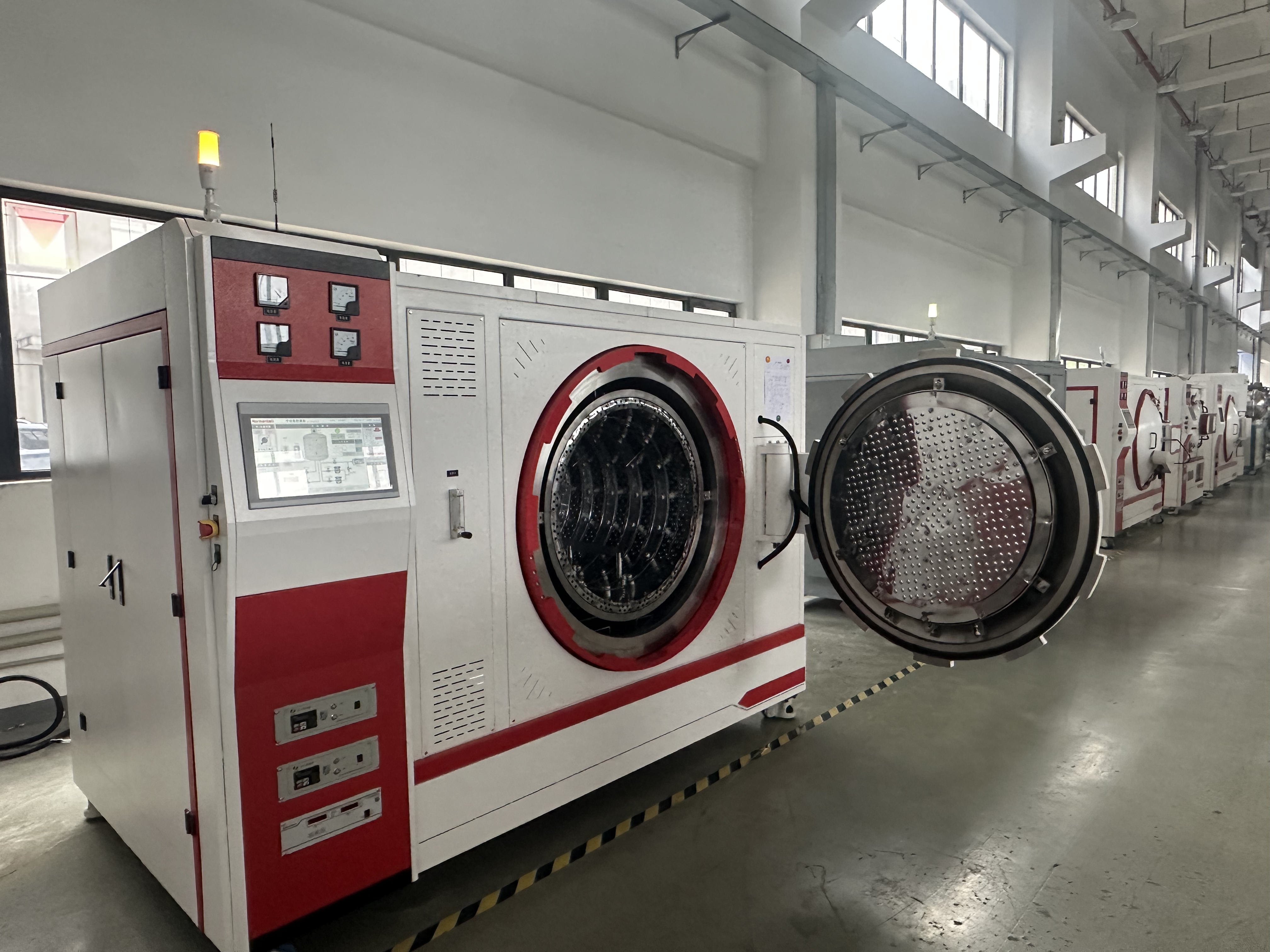
Normanthan Unveils Next-Generation Multi-Functional Vacuum Furnaces