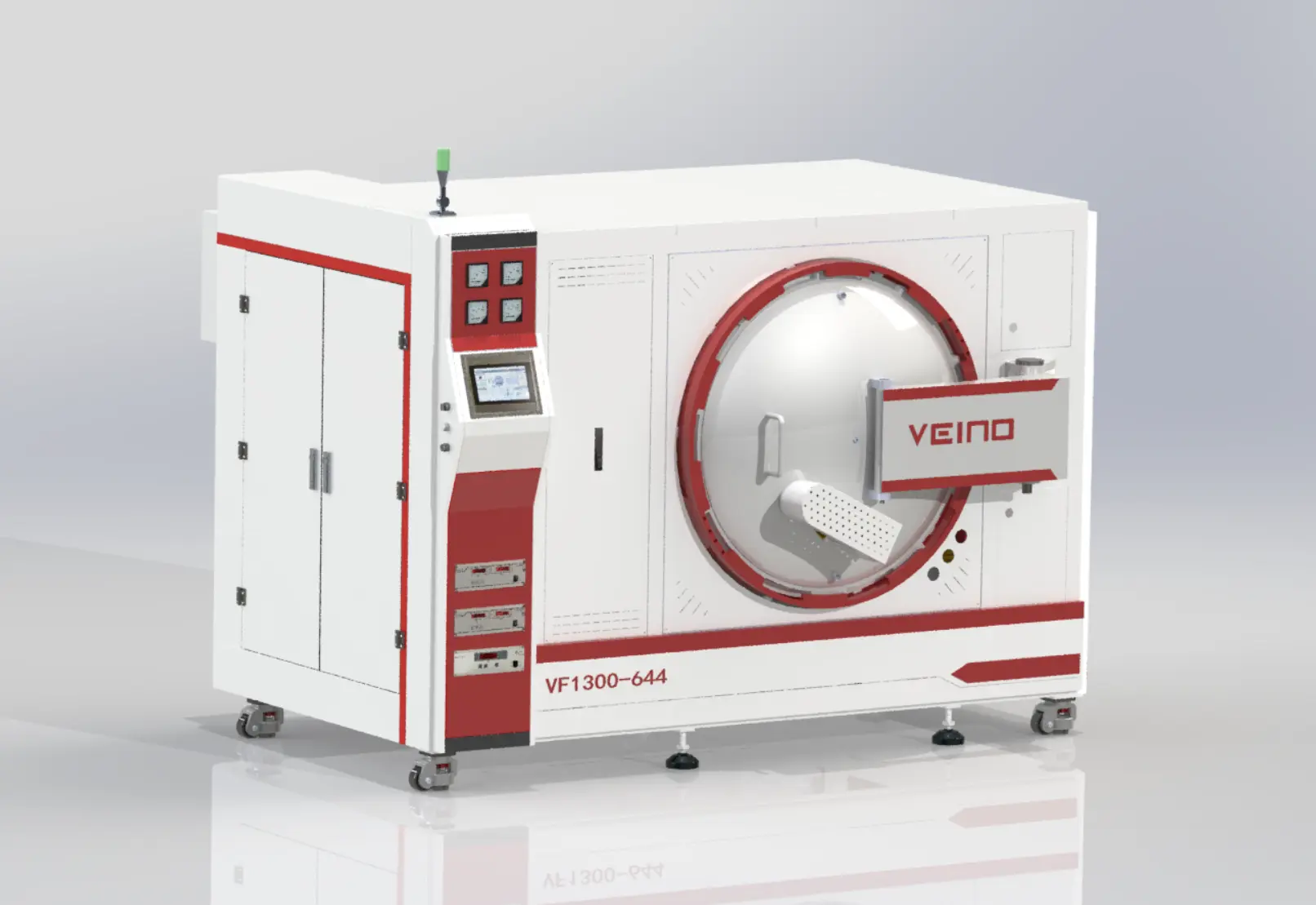
Vacuum Brazing Process Using a Vacuum Brazing Furnace

A vacuum brazing furnace is designed to join components by heating them to brazing temperature in a controlled vacuum environment. During the process, the parts to be joined are placed inside the furnace chamber and heated gradually. The vacuum atmosphere effectively prevents oxidation, gas formation, and other unwanted reactions at the joint area, which helps maintain clean surfaces and improves the overall quality and stability of the brazed joint.
Heating inside the vacuum brazing furnace is typically achieved through resistance heating elements. Once energized, these elements raise the temperature of the furnace chamber to the level required for brazing. As the temperature increases, the brazing filler metal begins to melt and flow into the joint gap by capillary action. The molten filler spreads evenly across the brazing area and forms a strong bond between the components upon cooling.
One of the main advantages of vacuum brazing is the high quality of the resulting joint. Because the process is carried out without flux and in an oxygen-free environment, the brazed seam is clean and free from porosity and cracks. The joints produced have high mechanical strength, low distortion, and excellent dimensional accuracy. The controlled heating method also allows precise temperature regulation, making it suitable for small and complex brazing areas where accuracy is critical.
In conclusion, vacuum brazing furnaces provide a reliable and effective method for producing high-quality brazed joints across a wide range of materials. When operated according to proper procedures and with attention to temperature control and process time, vacuum brazing delivers stable, repeatable results and remains a preferred solution for precision joining applications.
Edited by: Shristi Paudyal
© 2026 Normantherm Vacuum Furnace. All rights reserved.
You may also like
The Future of 3D Printing in Heat Treatment: How Normantherm is Leading the Way.
Vacuum Brazing Technology: The Key to Stronger and More Durable Joints.