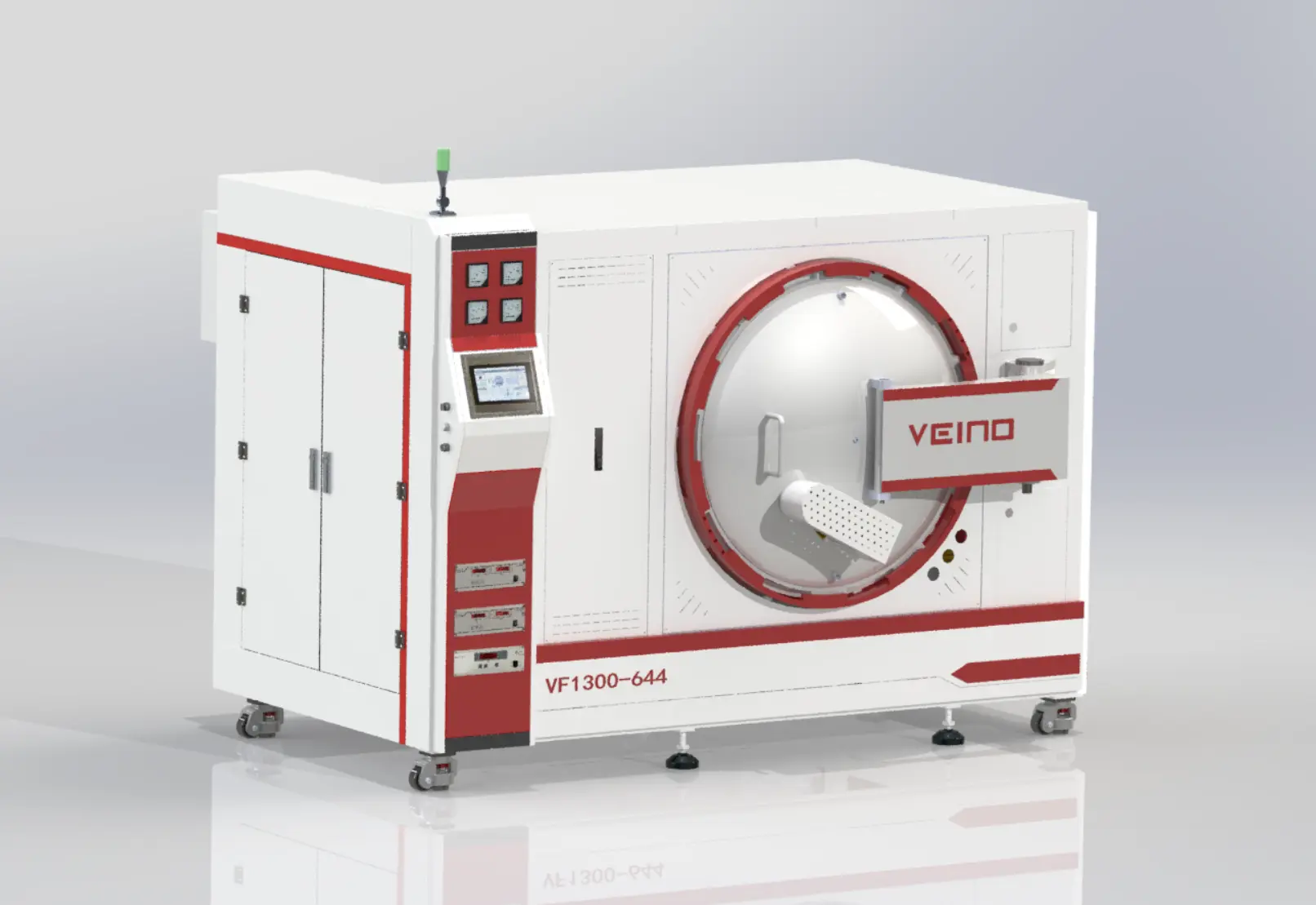
Scope of Vacuum Furnace Technology in Modern Industry
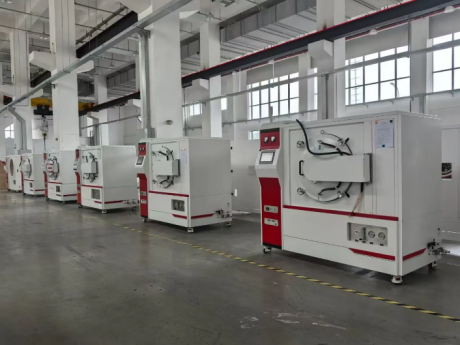
Vacuum furnaces are widely used as high-temperature processing equipment in modern industry. They are mainly applied in processes such as Brazing, sintering, annealing, heat treatment, melting, and other thermal operations involving metals, ceramics, crystalline materials, and similar substances. Due to their ability to provide a controlled, oxygen-free environment, vacuum furnaces have become essential equipment in many manufacturing and research fields.
One of the most important application areas of vacuum furnaces is metal processing. Metals are among the most commonly used raw materials in industrial production, and their performance often depends on proper heat treatment. By processing metals in a vacuum furnace at high temperature, properties such as strength, wear resistance, and corrosion resistance can be significantly improved. In the steel industry, vacuum furnaces are extensively used for heat treatment and melting of high-quality steel materials. Industries such as aviation, aerospace, automotive manufacturing, machinery, and tooling rely on vacuum furnaces to produce high-speed cutting tools, molds, and components that require high wear resistance and dimensional stability.
Vacuum furnaces also play an important role in the field of physics research, particularly in materials physics. This discipline focuses on studying the structure and physical properties of materials and provides the theoretical foundation for the development of new materials. Under high-temperature and high-vacuum conditions, vacuum furnaces allow researchers to alter the internal structure and performance of materials in a controlled manner. This makes it possible to study thermodynamic behavior, phase changes, and physical properties more accurately, supporting ongoing advances in fundamental and applied physics research.
Another major area of application is the semiconductor industry. With the rapid growth of electronic technology, semiconductor materials have become critical to modern electronics. Vacuum furnaces are commonly used for heat treatment, brazing, and annealing of semiconductor materials, helping to improve electrical properties and reduce lattice defects. These processes directly enhance the performance, stability, and reliability of semiconductor devices used in electronic systems.
In addition to metals and semiconductors, vacuum furnaces are widely used for processing non-metallic materials such as ceramics and glass. Ceramic materials are known for their high temperature resistance, corrosion resistance, and excellent insulation properties, which make them suitable for applications in aerospace, aviation, electronics, and other advanced industries. Vacuum furnaces enable precise control of temperature and processing conditions during sintering and heat treatment, improving the crystallinity, density, and overall quality of ceramic materials.
To sum up, vacuum furnaces are used across a wide range of thermal processes, including sintering, annealing, heat treatment, brazing, and melting of materials such as metals, semiconductors, ceramics, and glass. Their ability to provide clean, controlled processing conditions makes them indispensable in both industrial production and scientific research, contributing significantly to the continuous development of science and technology.
Edited by: Shristi Paudyal
© 2026 Normantherm Vacuum Furnace. All rights reserved.
You may also like
The Future of 3D Printing in Heat Treatment: How Normantherm is Leading the Way.
Vacuum Brazing Technology: The Key to Stronger and More Durable Joints.