Why Surgical Drill Bits Are Only as Good as Their Heat Treatment

An orthopedic drill bit bores through cortical bone at thousands of RPM, generates intense localized heat, and gets steam-sterilized hundreds of times across its working life. The metallurgy keeping it sharp through all of that begins and ends in the furnace.
Drilling Into Bone Is Not Like Drilling Into Anything Else
Cortical bone is one of the hardest biological materials a cutting tool ever encounters. It is dense, anisotropic, and, critically, it is alive. Drilling it generates frictional heat that, if excessive, causes thermal necrosis of the surrounding tissue: bone cells die, the surgical site becomes a site of failure, and implant fixation is compromised before the patient even leaves the theatre.
This is why the sharpness and hardness of a surgical drill bit is not just a product quality issue; it is a clinical safety issue. A sharp drill cuts cleanly and quickly, generating minimal heat. A dull one, whether dull from manufacture or dull from wear, forces the surgeon to apply more pressure, generates more friction, and puts the patient at risk.
Maintaining that sharpness across the full working life of the instrument starts with getting the heat treatment right.
The Problem With Conventional Heat Treatment
| The Problem | What it actually costs you |
| Decarburization | Carbon burns off the cutting surface in open-air furnaces. The drill looks perfect, but its edges are softer than spec. You won't catch it in visual inspection. The surgeon will catch it mid-procedure. |
| Thermal distortion | Uneven heating warps the flute geometry. A twisted drill drifts off-axis in bone, generating heat, damaging tissue, and leaving an oversized hole that compromises screw fixation. |
| Hardness scatter | Poor temperature uniformity across the batch means some drills hit HRC 64, others hit HRC 58. Both pass dimensional inspection. Only one cuts bone reliably after 50 sterilization cycles. |
| Surface contamination | Residues from atmospheric processing require acid pickling, an extra process step that introduces its own risks to dimensional tolerance and surface finish. |
What Vacuum Heat Treatment Changes
Surgical drill bits are typically manufactured from high-speed steel grades, M2, M35, or cobalt-enhanced variants, or from martensitic stainless steels for single-use disposable instruments. Both material families require hardening cycles at temperatures between 1,000°C and 1,280°C, followed by rapid quench, then one or more tempering passes.
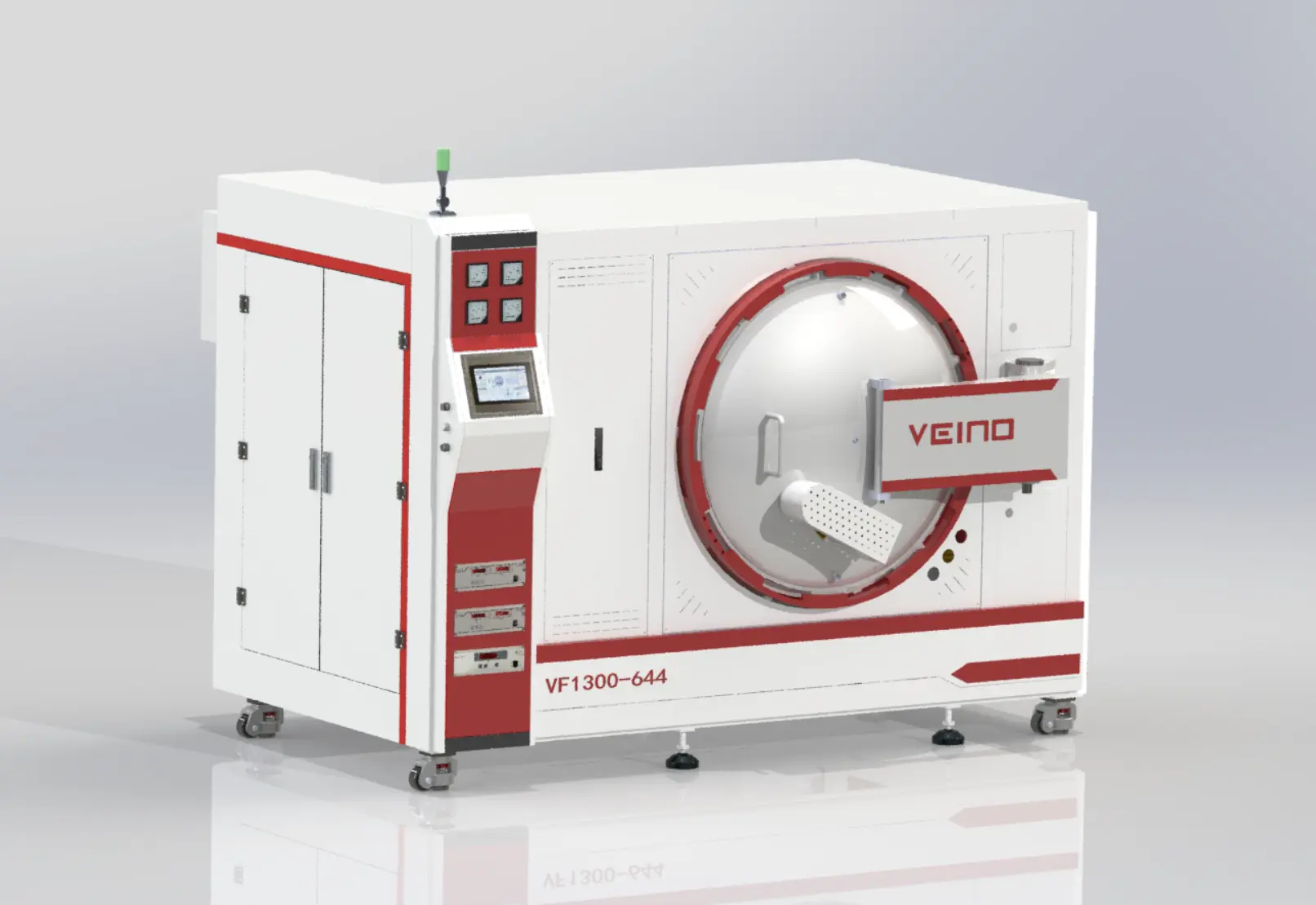
In a vacuum furnace, the entire cycle runs in an inert, oxygen-free atmosphere at pressures below 10*-4 mbar. The cutting edges, flute faces, and drill tip come out of the furnace with the same carbon content they went in with. The hardness at the very tip of the drill, the surface doing the work in bone, is exactly what the metallurgy of the alloy is capable of delivering. Nothing has been burned away, diluted, or contaminated.
The gas quench, typically nitrogen at 4 - 6 bar, is fast enough to achieve the required martensite transformation without distortion. Flute geometry, the helix angle, the relief angle, and the web thickness stay within tolerance. The drill that was ground to specification before heat treatment is still within specification after it.
What This Means for Manufacturers
- Higher first-pass yield, no decarburization means hardness is consistent and predictable. Fewer drills are failing the final inspection.
- No pickling or post-treatment cleaning, a bright surface finish straight from the furnace eliminates an entire process step.
- Batch-to-batch consistency, ±3°C temperature uniformity across the hot zone, means every drill in the load gets the same cycle.
- Audit-ready documentation, full cycle logging for ISO 13485 compliance and FDA 21 CFR Part 820 design controls, right out of the box.
- Validated process foundation, Normantherm furnaces are built to AMS 2750 pyrometry standards, making IQ/OQ/PQ qualification straightforward.
You may also like
The Future of 3D Printing in Heat Treatment: How Normantherm is Leading the Way.
Vacuum Brazing Technology: The Key to Stronger and More Durable Joints.