Why Cobalt-Chrome Knee Implants Depend on Vacuum Solution Treatment

The average person takes somewhere between 5,000 and 10,000 steps a day. Over the course of a year, that is upwards of a million loading cycles through the knee joint, each one transmitting forces equivalent to three or four times body weight through a relatively small contact area. For most of life, the knee handles this without complaint. But when cartilage breaks down, and the joint surfaces begin grinding against each other, the result is pain that can be genuinely disabling.
Total knee replacement has become one of the most routinely performed and consistently successful orthopedic surgeries in the world, restoring function and eliminating pain for hundreds of thousands of patients every year. At the center of it is a cobalt-chromium-molybdenum femoral component. This metal piece replaces the lower end of the thigh bone and articulates against a polyethylene tibial insert. It is a deceptively complex piece of engineering, and the process that gives it the properties it needs to last a lifetime begins inside a vacuum furnace.
Why Cobalt-Chrome, and What Makes It So Demanding
Cobalt-chromium-molybdenum alloy, most commonly formulated to the ASTM F75 standard, has been the material of choice for knee femoral components for decades. The reasons are straightforward enough: it is extraordinarily hard and wear-resistant, it maintains excellent mechanical properties under cyclic loading, and it is biocompatible, meaning the body tolerates long-term contact with it without mounting a significant immune response.
The wear resistance is particularly important. The femoral component articulates continuously against the polyethylene insert throughout every movement the patient makes. A material that wears quickly would generate debris particles in the joint space, triggering inflammation and eventually loosening the implant. Cobalt-chrome's hardness, typically in the range of 25 to 35 HRC after proper heat treatment, keeps wear rates extremely low over the life of the implant.
But cobalt-chrome is a complex alloy, and complexity comes with manufacturing challenges. The alloy contains cobalt, chromium, molybdenum, and smaller amounts of other elements, each contributing to specific properties. Chromium provides corrosion resistance by forming a passive oxide layer on the surface. Molybdenum strengthens the matrix and improves pitting corrosion resistance. Getting all of these elements to work together in the right way requires a carefully controlled thermal process, and both chromium and cobalt are highly reactive at elevated temperatures.
From Casting to Furnace: What the Process Actually Involves
Cobalt-chrome knee femoral components are typically produced by investment casting, a precision casting process that can achieve the complex curved geometry of the condylar surface with relatively tight dimensional tolerances. But as with nickel superalloys in aerospace, the as-cast condition of cobalt-chrome is not the finished condition. The rapid solidification of the casting process leaves the microstructure chemically inhomogeneous, with alloying elements distributed unevenly and carbide particles distributed in ways that can create localized weaknesses.
Solution treatment in a vacuum furnace addresses this directly. The casting is heated to a high temperature, typically around 1,200°C for ASTM F75 alloy, and held there long enough for the elements to diffuse and the microstructure to homogenize. Carbides that formed during solidification dissolve back into the matrix, and the chemistry becomes uniform throughout the component. When the furnace then quenches the part, using high-pressure inert gas, it freezes this homogeneous microstructure in place.
The result is a component with more consistent mechanical properties throughout its cross-section, better fatigue resistance, and improved ductility compared to the as-cast condition. For an implant that will experience millions of loading cycles over its working life, that consistency matters enormously. A localized microstructural weakness that might be tolerable in an industrial component becomes a potential fatigue crack initiation site in a knee implant, something that cannot be allowed.
The Vacuum Requirement, and Why Atmosphere Furnaces Fall Short
The reason vacuum is essential for processing cobalt-chrome at solution treatment temperatures comes back to the chromium content. At around 1,200°C, chromium oxidizes readily in any atmosphere containing oxygen or water vapor. This selective oxidation at the surface depletes chromium from the near-surface layer of the component, the very region that is most important for corrosion resistance in service.
A cobalt-chrome femoral component that has been solution-treated in a contaminated atmosphere may look perfectly normal after cleaning and polishing. But the subsurface chemistry has been altered. The passive chromium oxide layer that would normally protect the implant from corrosion in the body's fluid environment is compromised. Over time, this can manifest as accelerated corrosion at the implant surface, increased ion release into surrounding tissue, and in the worst cases, a condition called metallosis, the accumulation of metal debris in the periprosthetic tissue that causes inflammation and implant failure.
Vacuum processing eliminates this risk. With the atmosphere evacuated from the furnace chamber, there is no oxygen present to react with the chromium during heating. The surface of the component is protected throughout the thermal cycle, and the passive layer that forms when the part is exposed to air after processing is clean, continuous, and fully protective.
A Component That Has to Last a Lifetime
Total knee replacement has an expected implant survival of 15 to 20 years in most patients, and in younger, more active patients, that means the implant may need to last considerably longer. Every step of the manufacturing process, from alloy composition through casting, heat treatment, finishing, and inspection, contributes to whether that expectation is met.
The vacuum solution treatment of the cobalt-chrome femoral component is not the glamorous part of that process. It happens quietly in a sealed chamber, invisible from the outside, and the component that emerges looks much the same as the one that went in. But the microstructure has been transformed, homogenized, strengthened, and properly prepared for the decades of demanding service that follow.
For the patient walking pain-free ten years after their surgery, none of that is visible. It doesn't need to be. It just needs to work.
Manufacturing cobalt-chrome orthopedic implants and evaluating your heat treatment process?
Normantherm works with orthopedic implant manufacturers to specify vacuum furnace systems that meet the exacting demands of medical-grade cobalt-chrome processing, from temperature uniformity and vacuum integrity through to process documentation and ISO 13485 compliance support. Talk to our team to discuss your application.
You may also like

Normanthan Broadens Its Impact Across Key High-Tech Industries
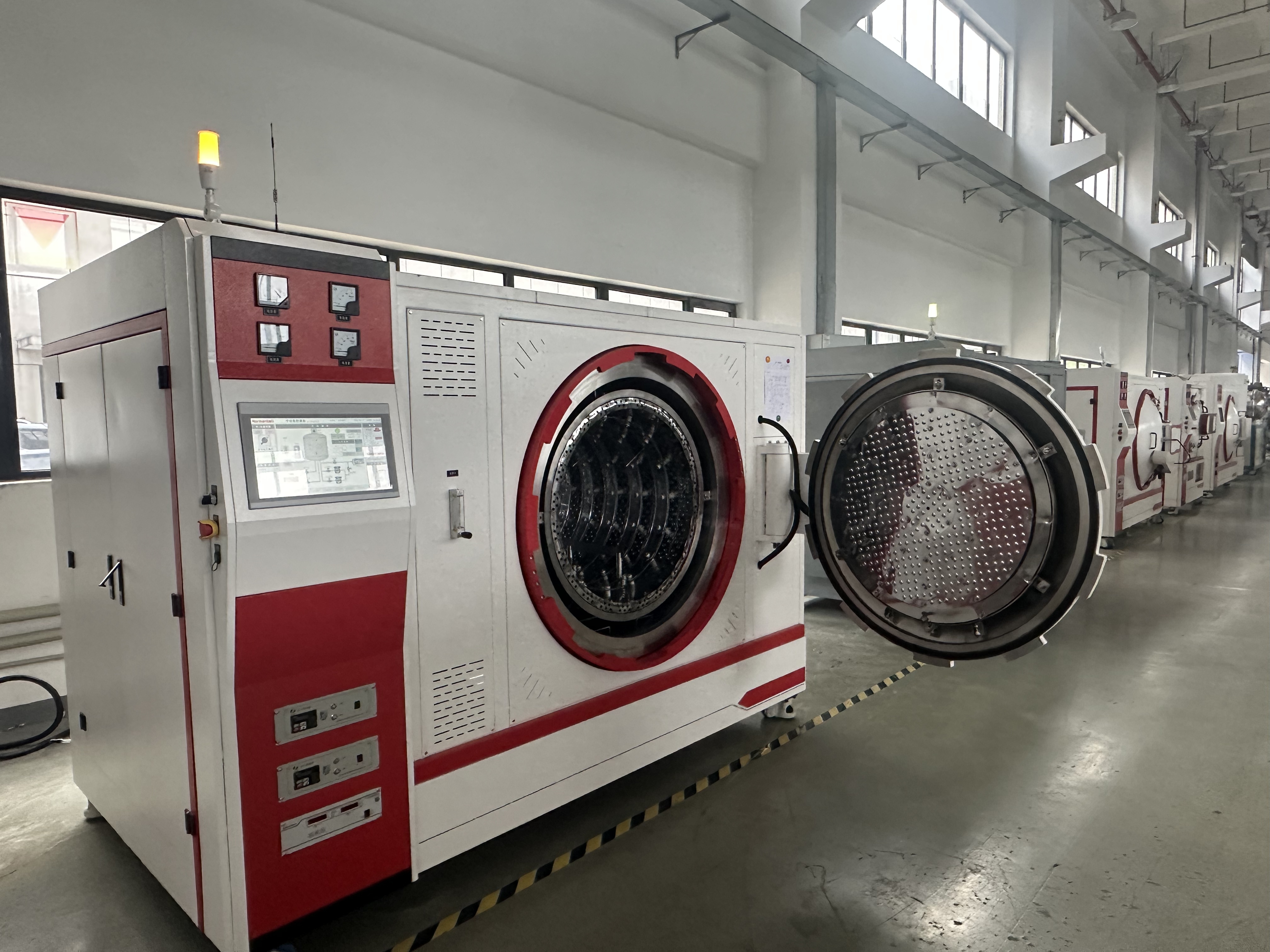
Normanthan Unveils Next-Generation Multi-Functional Vacuum Furnaces