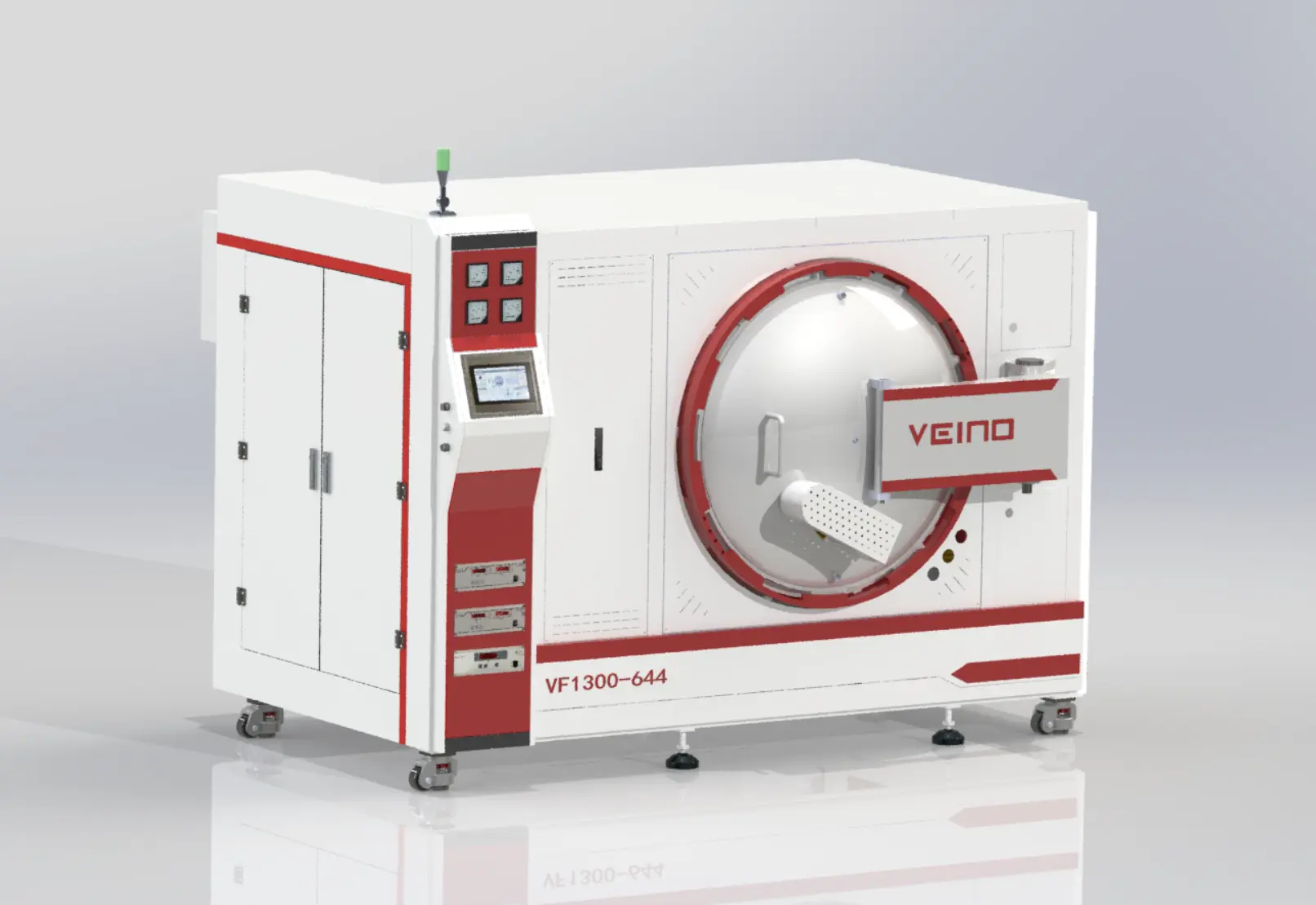
Vacuum Heat Treatment of 316L Stainless Steel for Grain Structure Optimization

316L stainless steel is widely used in industries requiring high corrosion resistance, structural stability, and reliable mechanical performance. However, to achieve optimal material properties, manufacturers often perform specialized heat treatment processes to refine the internal microstructure and relieve residual stress.
Vacuum heat treatment provides a controlled environment that allows precise shaping, microstructure optimization, and uniform grain formation in 316L stainless steel components.
At Normantherm, advanced vacuum furnace systems enable high-precision heat treatment processes designed to improve the performance and structural reliability of stainless steel materials.
Understanding 316L Stainless Steel
316L Stainless Steel is a low-carbon austenitic stainless steel known for its excellent corrosion resistance and mechanical stability.
It is commonly used in applications where materials must withstand harsh environments, including:
- Chemical processing equipment
- Medical and surgical instruments
- Marine components
- Food processing machinery
- Precision industrial equipment
The “L” in 316L refers to the low carbon content, which helps prevent carbide precipitation during welding and high-temperature processing.
Why Heat Treatment Is Required for 316L Stainless Steel
Although 316L stainless steel offers strong corrosion resistance, mechanical processing such as machining, forming, or welding can introduce internal stresses and microstructural irregularities.
Heat treatment is often performed to achieve several objectives:
Shaping and Stress Relief
During manufacturing, components may undergo mechanical deformation. Controlled heating allows the material to relax internal stresses while maintaining dimensional accuracy.
Microstructure Optimization
Heat treatment allows the internal crystal lattice of the steel to reorganize into a more stable configuration.
Grain Size Uniformity
Uniform grain size improves mechanical strength, toughness, and fatigue resistance.
Improved Material Stability
Optimizing the internal structure ensures consistent performance under thermal or mechanical loads.
Role of Lattice Optimization in Stainless Steel Performance
The internal atomic structure of stainless steel, known as the crystal lattice, directly influences its mechanical and physical properties.
Through precise thermal cycles in a vacuum furnace, the lattice structure can be optimized to:
- Reduce structural defects
- Improve atomic alignment
- Minimize internal stress concentration
- Achieve uniform grain distribution
This process enhances the long-term stability and reliability of the material.
Advantages of Vacuum Heat Treatment
Vacuum heat treatment provides several important advantages compared with conventional furnace processing.
Oxidation-Free Processing
The vacuum environment eliminates oxygen and other reactive gases, preventing oxidation and surface contamination.
Precise Temperature Control
Advanced furnace systems maintain accurate temperature control, ensuring consistent heat treatment across the entire component.
Uniform Grain Formation
Even heating and cooling allow the grain structure of the material to develop uniformly.
Improved Surface Quality
Vacuum processing prevents scaling and maintains a clean surface finish.
Applications of Heat-Treated 316L Stainless Steel

After optimized heat treatment, 316L stainless steel components are widely used in industries that demand reliability and corrosion resistance.
These include:
- Medical equipment manufacturing
- Aerospace and precision engineering
- Marine systems
- Chemical processing plants
- Semiconductor manufacturing equipment
Uniform grain structure and stable mechanical properties are essential for these high-performance applications.
Normantherm Vacuum Furnace Solutions
Normantherm provides advanced vacuum furnace systems designed for precise heat treatment of stainless steel and other high-performance materials.
Key features of these systems include:
- High vacuum levels for oxidation-free processing
- Accurate temperature uniformity
- Programmable heating and cooling cycles
- Reliable microstructure control
These capabilities allow manufacturers to achieve consistent metallurgical quality in complex components.
Conclusion
Heat treatment of 316L stainless steel plays a critical role in shaping, stress relief, and lattice optimization. By ensuring uniform grain size and stable microstructure, vacuum heat treatment significantly improves the durability and performance of stainless steel components.
With advanced vacuum furnace technology, Normantherm continues to provide reliable solutions for high-precision heat treatment in modern manufacturing industries.
You may also like
The Future of 3D Printing in Heat Treatment: How Normantherm is Leading the Way.
Vacuum Brazing Technology: The Key to Stronger and More Durable Joints.