Vacuum Brazing of Plate Fin Heat Exchangers: Process and Advantages
Plate fin heat exchangers are widely used in industries where compact design, high efficiency, and reliability are essential. Their construction involves multiple thin plates and fins assembled into a dense structure, requiring precise and uniform joining across a large number of contact points. Vacuum brazing has become the preferred method to achieve this level of quality and consistency.
Vacuum Brazing Process
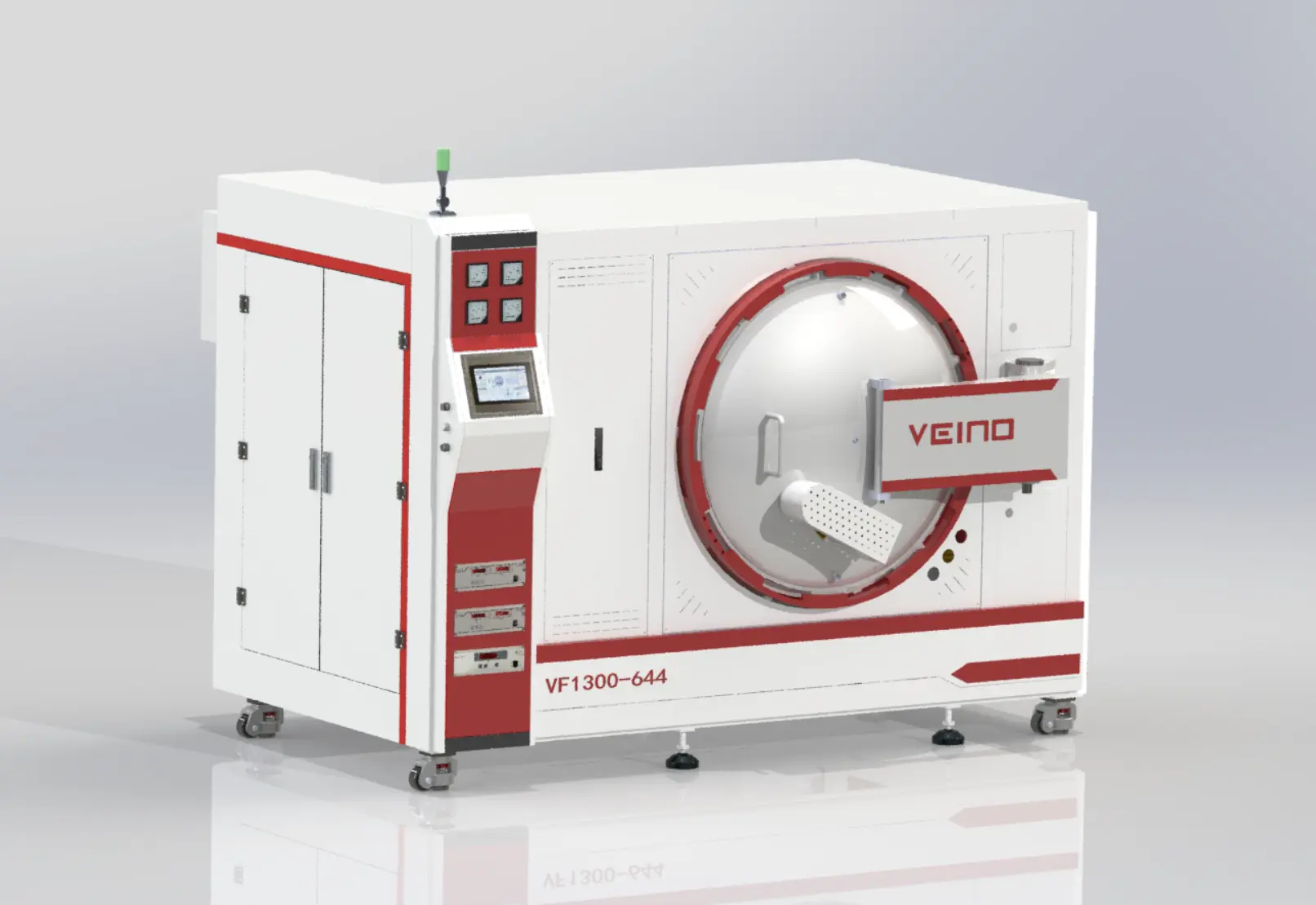
The process begins with thorough pre-cleaning of all components to remove oils, oxides, and contaminants that could affect joint integrity. The assembled core is then loaded into a vacuum furnace, where the chamber is evacuated to create a controlled, oxygen-free environment. This prevents oxidation during heating and ensures proper wetting of the brazing alloy.
A carefully programmed thermal cycle is applied, including controlled heating rates and soaking stages to achieve uniform temperature distribution throughout the assembly. Once the brazing temperature is reached, the filler metal melts and flows into the joint interfaces through capillary action. This results in strong metallurgical bonding across all contact surfaces, even in complex, densely packed geometries.
After brazing, controlled cooling is performed in the furnace. Depending on material and application requirements, this may include inert gas cooling to achieve consistent mechanical properties and maintain dimensional stability.
Advantages
Vacuum brazing offers several important advantages for plate-fin heat exchanger manufacturing. The absence of oxygen prevents oxidation and eliminates the need for flux, resulting in clean, contamination-free joints. The process ensures high joint strength and excellent leak-tightness, which are critical for heat exchanger performance. In addition, uniform heating and controlled cooling help minimize distortion, preserving tight tolerances in compact designs.
Another key benefit is process repeatability. With precise control over temperature, vacuum level, and cycle parameters, manufacturers can achieve consistent results across batches, making vacuum brazing well-suited for both precision and high-volume production.
For manufacturers aiming to deliver reliable and high-performance plate-fin heat exchangers, vacuum brazing provides a stable, efficient, and technically superior joining solution. With Normantherm vacuum furnace systems, this process is further enhanced through precise temperature uniformity, stable vacuum control, and robust system design, ensuring consistent quality and dependable performance in every production cycle.

Fig: Vacuum brazed plate fin heat exchangers
For more information, you may contact us.
You may also like
The Future of 3D Printing in Heat Treatment: How Normantherm is Leading the Way.
Vacuum Brazing Technology: The Key to Stronger and More Durable Joints.