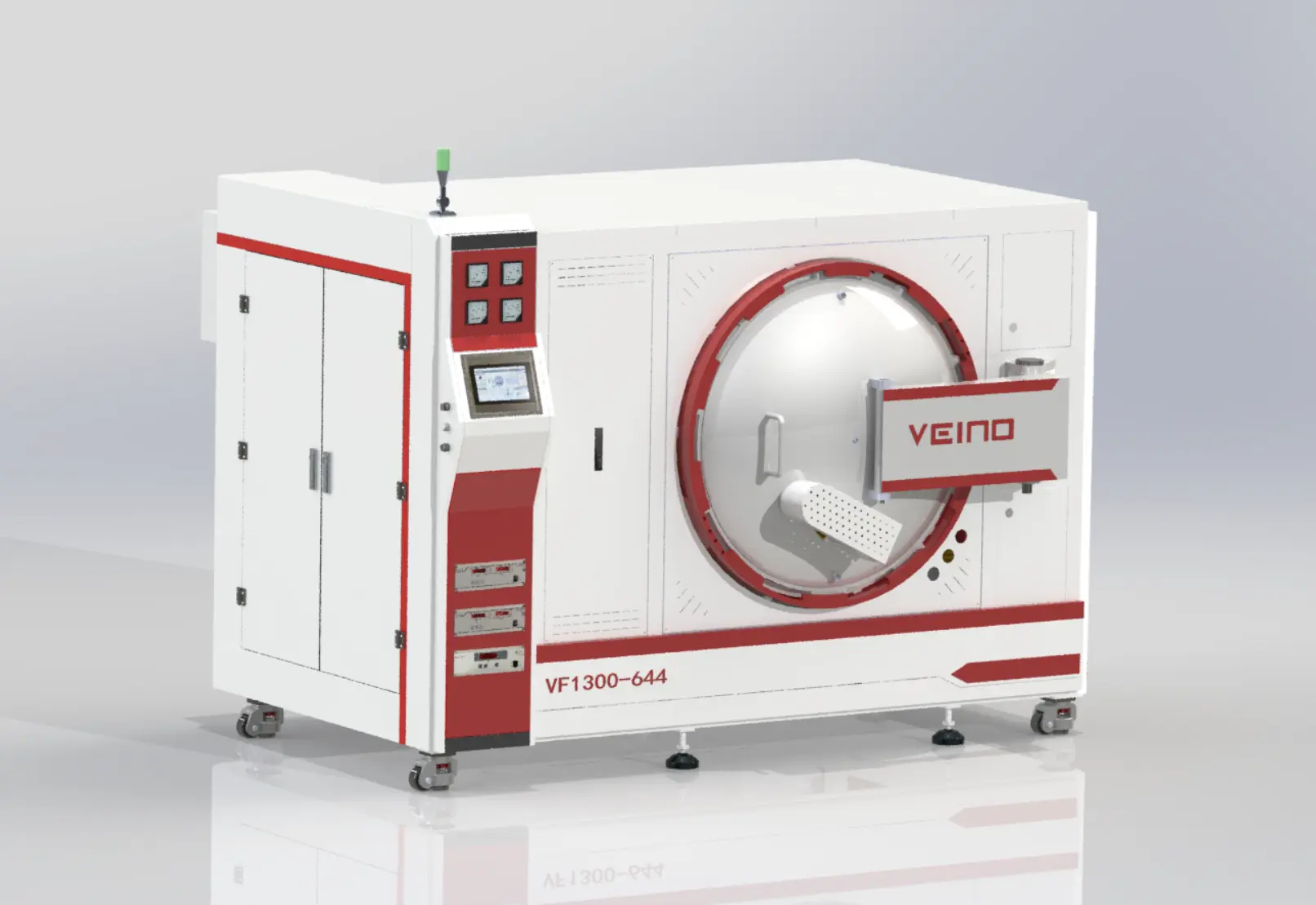
Vacuum Brazing for Aluminum Heat Exchanger

Aluminum heat exchangers are widely used in industries such as automotive, HVAC, aerospace, and energy systems due to their excellent thermal conductivity, lightweight structure, and corrosion resistance. However, joining aluminum components with high precision and reliability can be challenging using conventional methods. This is where vacuum brazing has become one of the most effective solutions for manufacturing high-performance aluminum heat exchangers.
Basic Idea: Vacuum brazing is a controlled heat-treatment process carried out in a vacuum environment, where aluminum components are joined using a filler metal without melting the base material. The absence of oxygen inside the furnace prevents oxidation, allowing the filler alloy to flow smoothly and create clean, high-integrity joints.
Why Vacuum Brazing is Ideal for Aluminum Heat Exchangers
a. Aluminum is highly reactive with oxygen and forms a stable oxide layer on its surface. In conventional brazing environments, this oxide layer can prevent proper bonding between parts. A vacuum environment eliminates this issue by removing oxygen and contaminants, ensuring that the filler metal wets the base material effectively.
b. For complex assemblies such as plate-fin or tube-fin heat exchangers, vacuum brazing provides uniform heating across the entire component. This allows multiple joints to be brazed simultaneously in a single cycle while maintaining excellent dimensional stability.
The result is a strong, leak-free joint that maintains the structural and thermal performance required for high-efficiency heat transfer systems.
Process Overview
In a typical vacuum brazing cycle, the assembled heat exchanger components are first cleaned to remove oil, moisture, and surface contaminants. The assembly is then placed inside a high-temperature vacuum furnace where the chamber pressure is reduced to a high vacuum level.
The furnace temperature is gradually increased until it reaches the brazing temperature, usually between 580°C and 620°C, depending on the aluminum alloy and filler material used. At this stage, the filler alloy melts and flows through capillary action between the joint gaps, creating a metallurgical bond between the aluminum components.
After brazing, the system is cooled in a controlled environment to minimize thermal stress and distortion. The final product typically requires minimal post-processing because the vacuum environment prevents oxidation and flux residue.
Advantages of Vacuum Brazing for Aluminum Heat Exchangers
· Vacuum brazing does not require flux, which results in extremely clean joints. This is particularly important for aluminum heat exchangers because flux residues can cause internal corrosion or affect long-term reliability.
· The vacuum environment prevents oxidation during the heating process, allowing the filler metal to flow smoothly and create strong and high-integrity metallurgical bonds between aluminum components.
· Vacuum furnaces provide excellent temperature uniformity throughout the chamber. This ensures consistent brazing quality even for complex or large heat exchanger assemblies.
· The controlled vacuum level and precise temperature control improve process stability, making the brazing results more repeatable and reliable in industrial production.
· The process reduces common brazing defects such as incomplete bonding, oxidation, or leakage in heat exchanger channels.
· Multiple joints in a heat exchanger assembly can be brazed simultaneously in a single thermal cycle, which significantly improves manufacturing efficiency.
· Because the process occurs in a clean vacuum environment, the final components usually require minimal post-processing or cleaning.
· Overall production efficiency is improved since several assemblies can be processed at the same time while maintaining consistent quality.
For manufacturers seeking reliable brazing performance, the right furnace technology makes a significant difference. Normantherm Vacuum Furnace provides advanced vacuum furnace solutions designed for precise temperature control, stable vacuum conditions, and consistent brazing quality. Our systems help industries achieve cleaner processes, stronger joints, and higher production efficiency in demanding heat treatment and brazing applications.
For more information, you may contact us.
You may also like
The Future of 3D Printing in Heat Treatment: How Normantherm is Leading the Way.
Vacuum Brazing Technology: The Key to Stronger and More Durable Joints.