Tungsten Carbide Cutting Tools

Tungsten carbide cutting tool inserts sit at the heart of modern machining. They are the small, precisely engineered pieces that actually make contact with the workpiece, handling extreme cutting forces, heat, and abrasion that would rapidly destroy any other material. What many people outside the tooling industry don't fully appreciate is that producing a high-quality carbide insert is itself a sophisticated manufacturing challenge. The carbide cutting edges and substrate must be joined with absolute precision, and that joining process defines how the insert performs from the very first cut to the last.
Vacuum Brazing
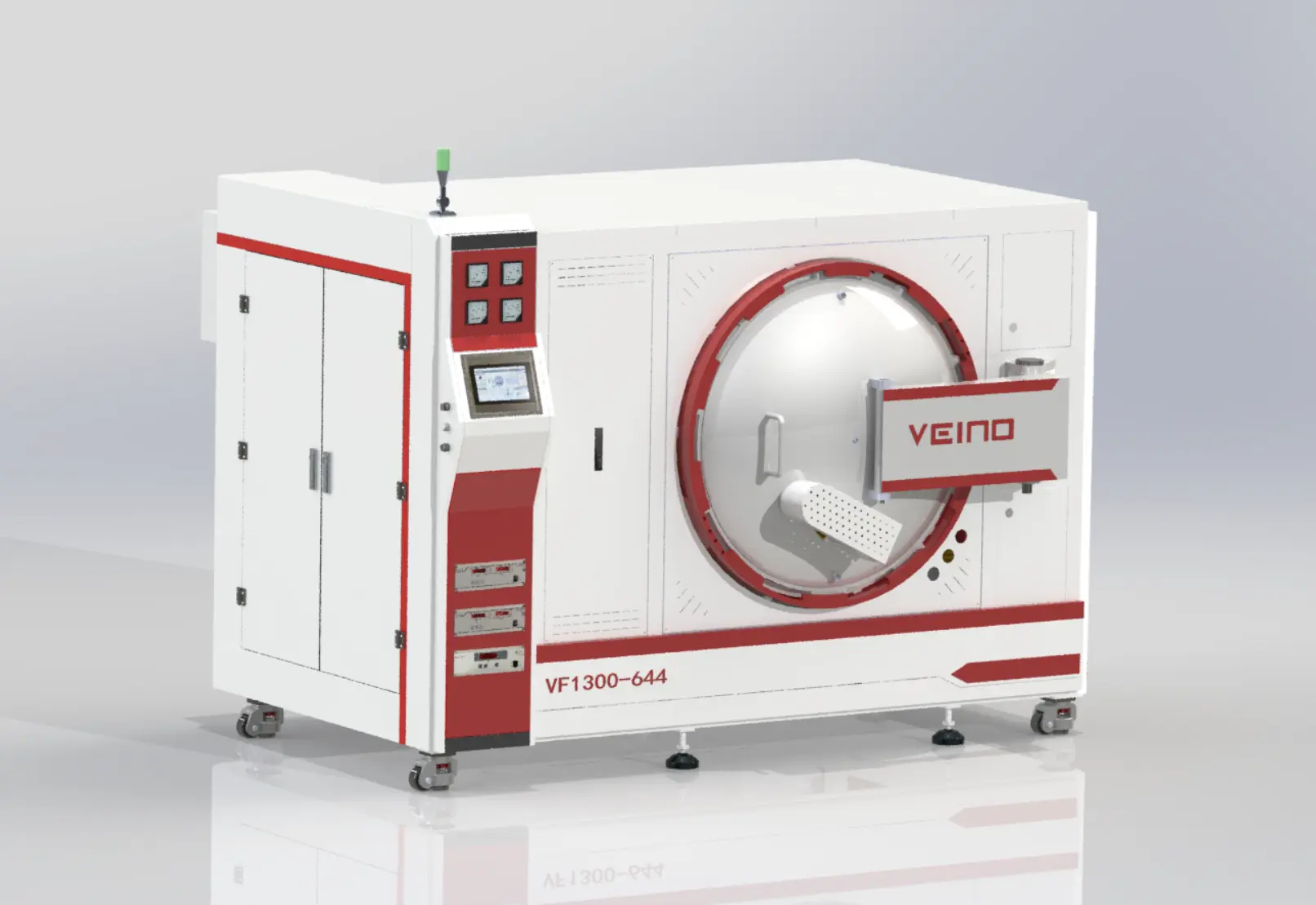
During the manufacture of tungsten carbide cutting tool inserts, vacuum brazing is used to bond the carbide components together into a single, coherent piece. This is not a peripheral step; it is the process that determines the structural integrity of the insert itself. In conventional open-air brazing, oxidation, uneven heat distribution, and flux residues can introduce weaknesses right at the bond line. Vacuum brazing eliminates all of that. Inside a Normantherm vacuum furnace, the carbide assembly is brought to brazing temperature in a clean, oxygen-free environment, producing a void-free, flux-free bond with full metallurgical contact across every interface. The insert that comes out is dense, consistent, and free from the internal defects that shorten tool life in service.

What a better insert means in real cutting conditions
The quality of the brazing process inside the insert has a direct and measurable impact on how it behaves under cutting loads. An insert with a clean, fully consolidated bond resists micro-crack propagation, handles interrupted cuts without chipping, and maintains its edge geometry for longer, all of which translate into better surface finish, tighter tolerances, and fewer insert changes on the production floor. Conversely, an insert with voids or weak zones at the bond interface may look perfectly fine out of the box, but will fail earlier and less predictably. For manufacturers running high-volume or high-precision operations, that unpredictability carries a real cost. Vacuum brazed inserts simply behave more consistently, and that consistency is worth a great deal.
Why the furnace you use makes all the difference
Producing vacuum brazed tungsten carbide inserts consistently requires a furnace that can reliably hold the precise thermal profiles that carbide demands, controlled ramp rates, accurate soak temperatures, and cooling cycles that prevent residual stress from developing in the finished piece. Normantherm vacuum furnaces are built specifically for this kind of exacting work. With high-uniformity hot zones, programmable multi-stage thermal profiles, and robust process controls, our furnaces give cutting tool manufacturers the repeatability they need to produce inserts that meet tight quality specifications, batch after batch. If your operation depends on the performance of tungsten carbide cutting tools, the quality of your inserts starts with the process used to make them, and we are here to make sure that process is right.
Contact Normantherm today to learn how our vacuum furnace solutions support precision carbide insert manufacturing.
You may also like
The Future of 3D Printing in Heat Treatment: How Normantherm is Leading the Way.
Vacuum Brazing Technology: The Key to Stronger and More Durable Joints.