How to Eliminate Internal Stress in Metal Components

Professional solutions based on vacuum annealing furnace technology, why residual stress matters, and how modern thermal processing solves it.
Internal stress, often called residual stress, is an invisible threat embedded within metal components during manufacturing. It forms silently during machining, welding, casting, forging, and heat treatment, leaving behind locked-in forces that compromise dimensional stability, fatigue life, and corrosion resistance. In precision industries where tolerances are measured in microns, the consequences can be catastrophic.
The good news is that modern vacuum annealing furnace technology offers a proven, controllable, and contamination-free path to complete stress relief. This article explains what internal stress is, why it forms, and how vacuum annealing eliminates it, professionally and permanently.
Understanding Internal Stress in Metals
Internal stress refers to the self-equilibrating forces present within a material in the absence of any external load. These stresses arise whenever a metal experiences non-uniform plastic deformation or temperature gradients that the material cannot fully recover from on its own.
Ø Mechanical Stress: Caused by machining, grinding, cold forming, and shot peening. Surface layers are deformed while the bulk remains unaffected.
Ø Thermal Stress: Rapid heating or cooling creates temperature differentials. Outer layers expand or contract faster than the core, locking in stress.
Ø Transformation Stress: Phase changes during heat treatment (e.g., martensitic transformation in steel) involve volume changes that generate internal stress fields.
Ø Assembly Stress: Press-fitting, bolting, and welding force materials into positions they would not naturally occupy, creating sustained internal tension.
Left unaddressed, these stresses manifest as warping after machining, stress-corrosion cracking in service, reduced fatigue strength, and unpredictable dimensional changes over time, all of which translate directly into field failures and cost overruns.
Why Conventional Stress Relief Often Falls Short
Traditional stress-relief annealing in open-air or atmospheric furnaces does reduce internal stress, but it comes with significant trade-offs that vacuum annealing eliminates.
“When you anneal in air, you solve one problem and introduce two others. Oxidation and decarburization undo the precision your machining and finishing teams worked hard to achieve.”
Limitation of Atmospheric Annealing
In a standard atmospheric furnace, the component is exposed to oxygen, nitrogen, and moisture at elevated temperatures. Under these conditions, surface oxidation is unavoidable, steel develops scale, aluminum forms thick oxide layers, and titanium alloys become contaminated. For components with tight dimensional tolerances or polished surfaces, this is unacceptable.
Furthermore, in carbon steels and tool steels, oxygen exposure at annealing temperatures causes decarburization, a reduction in carbon content at the surface, which undermines hardness, wear resistance, and fatigue strength. The part is stress-relieved, but degraded.
The Salt Bath Alternative and Its Hazards
Salt bath stress relieving offers better atmosphere control, but the handling of molten salt introduces environmental and safety hazards, waste disposal challenges, and surface contamination risks. For high-value aerospace, medical, or semiconductor components, these are simply not acceptable trade-offs.
The Solution
Vacuum Annealing: The Professional Standard
Vacuum annealing furnaces create a controlled, high-temperature environment at extremely low pressures, typically in the range of 10^-3 to 10^-6 mbar, where oxidizing gases are absent, and the component surface is fully protected throughout the thermal cycle.
This combination of precise temperature control, uniform heating, and oxygen-free atmosphere makes vacuum annealing the benchmark process for stress elimination in precision and high-value components.
How It Works: The Thermal Mechanism
At elevated temperatures, atomic mobility within the metal's crystal lattice increases significantly. Dislocations, the microscopic defects that carry residual stress, have enough energy to move, annihilate each other, and rearrange into lower-energy configurations. The result is a dramatic reduction in the internal stress field without any change to the component's bulk properties or surface condition.
| MATERIAL | TYPICAL TEMP. RANGE | HOLD TIME | STRESS REDUCTION |
| Carbon & Low-Alloy Steel | 550 - 680°C | 1 – 4hrs | Up to 90% |
| Stainless Steel(Austenitic) | 900 - 1100°C | 30min – 2hrs | 85 – 95% |
| Titanium Alloys | 480 - 600°C | 1 – 4hrs | Up to 85% |
| Tool Steel (HSS) | 600 - 750°C | 2 – 6hrs | Up to 95% |
| Aluminum Alloys | 250 - 350°C | 1 – 3hrs | 70 – 90% |
| Nickel Superalloys | 870 - 1040°C | 1 – 4hrs | Up to 90% |
Key Process Parameters for Effective Stress Relief
Achieving complete, repeatable stress elimination in a vacuum furnace is as much about process engineering as it is about equipment capability. The following parameters must be carefully controlled and validated.
1. Heating Rate Control
Rapid heating can itself generate new thermal stress gradients, particularly in thick-section components or materials with low thermal conductivity. Controlled ramp rates, typically 3 to 10 °C per minute, allow the charge to heat uniformly and prevent introducing the very stresses the process is designed to eliminate.
2. Temperature Uniformity
A furnace that achieves ±5 °C uniformity across the work zone ensures all portions of the component reach the target stress-relief temperature simultaneously. Modern multi-zone vacuum furnaces with thermocouple-validated load surveys achieve this reliably, even for complex geometries.
3. Soak Time and Temperature Selection
The soak temperature must be high enough to activate dislocation mobility, but below any transformation temperature that could alter the material's microstructure or hardness. Hold time allows full equilibration; insufficient soak time is the most common cause of incomplete stress relief.
4. Controlled Cooling Rate
After soaking, the component must be cooled slowly and uniformly, typically at 2 to 6 °C per minute through the critical temperature range, to prevent thermal gradients from reintroducing stress. Vacuum furnaces with partial-pressure gas backfill (typically argon or nitrogen) provide precise cooling rate control.
5. Vacuum Level Maintenance
The furnace must maintain adequate vacuum, typically better than 5 * 10^-4 mbar, throughout the entire thermal cycle, especially during the heating and soaking phases when outgassing from the component and fixturing is most intense. Robust pumping systems and clean internal surfaces are essential.
Where Vacuum Stress-Relief Annealing Is Essential
Industries that rely on vacuum annealing for stress relief
ü Aerospace & Defense: Turbine blades, structural airframe components, landing gear, where fatigue life is non-negotiable and surface integrity is mandatory.
ü Medical Devices: Surgical instruments, implants, and diagnostic components requiring absolute cleanliness, corrosion resistance, and dimensional stability.
ü Precision Tooling: Die inserts, mold cavities, and cutting tools where distortion during finish machining or service causes scrap and downtime.
ü Semiconductor Equipment: Vacuum chamber components, wafer handling fixtures, and optics holders that must maintain flatness under thermal cycling.
ü Power Generation: Steam turbine components, pressure vessel parts, and reactor internals processed to meet ASME and EN material specifications.
ü Automotive Racing & Performance: Crankshafts, connecting rods, and gearbox components subjected to high cyclic loads and requiring maximum fatigue strength.
The Bottom Line: Eliminate Stress, Extend Life, Ensure Precision
Internal stress is not a minor inconvenience; it is a systematic, quantifiable threat to component performance, dimensional integrity, and service life. For industries where precision and reliability are the baseline requirement, not the aspiration, addressing residual stress is non-negotiable.
Vacuum annealing furnaces offer the most complete and contamination-free solution available. With proper process engineering, controlled heating rates, validated temperature uniformity, optimized soak parameters, and managed cooling, stress reductions of 85 - 95% are routinely achievable across a wide range of metallic materials.
Whether you are processing aerospace-grade titanium, precision tool steel dies, or stainless steel medical components, vacuum stress-relief annealing is the professional standard, and the investment in proper thermal processing pays for itself many times over in reduced distortion, extended fatigue life, and eliminated field failures.
For more information, you may contact us.
You may also like
Normanthan Broadens Its Impact Across Key High-Tech Industries
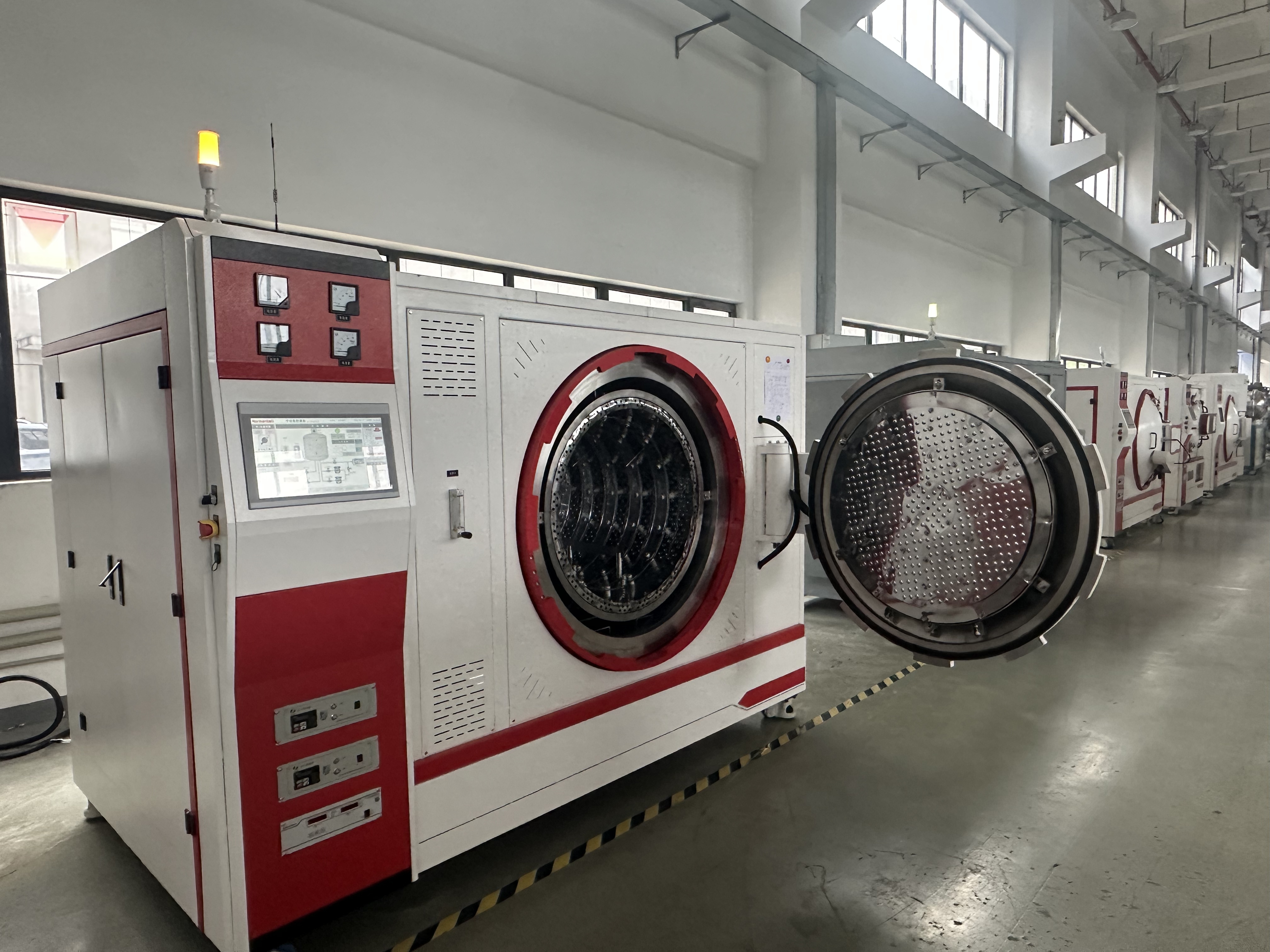
Normanthan Unveils Next-Generation Multi-Functional Vacuum Furnaces